
Subscribe to continue reading
Become a paid subscriber to get access to the rest of this post and other exclusive content.

Become a paid subscriber to get access to the rest of this post and other exclusive content.

Sometimes I don’t feel like waking up in the morning and I want to hit the snooze button and this morning was one of those mornings as I only had 5 hours of sleep. But I remembered that the reason I’ve included running in my morning schedule in the first place is to kickstart my bodily functions such as my metabolism so that I have a better appetite and blood flow to improve my brain function, warm up my body for the day ahead at work so that I’m awake and ready for the day as soon as I clock in.
It doesn’t matter how long it takes to complete your morning run/workout as long as you get out of bed, get some fresh air and move your body.
Washing your face with cold water will help you wake up
Even if you don’t feel like eating anything, eat something. A banana, a cheese bread, or even drink a protein shake. If you work out you need calories, and other nutrients to replace energy and grow muscle. If all you do is consume energy and don’t replace it with food you will lose muscle and fat. And if you’re looking to build strength and muscle, you need to eat. Don’t worry about eating too much fat because you can always do an extra mile to burn it off if necessary.
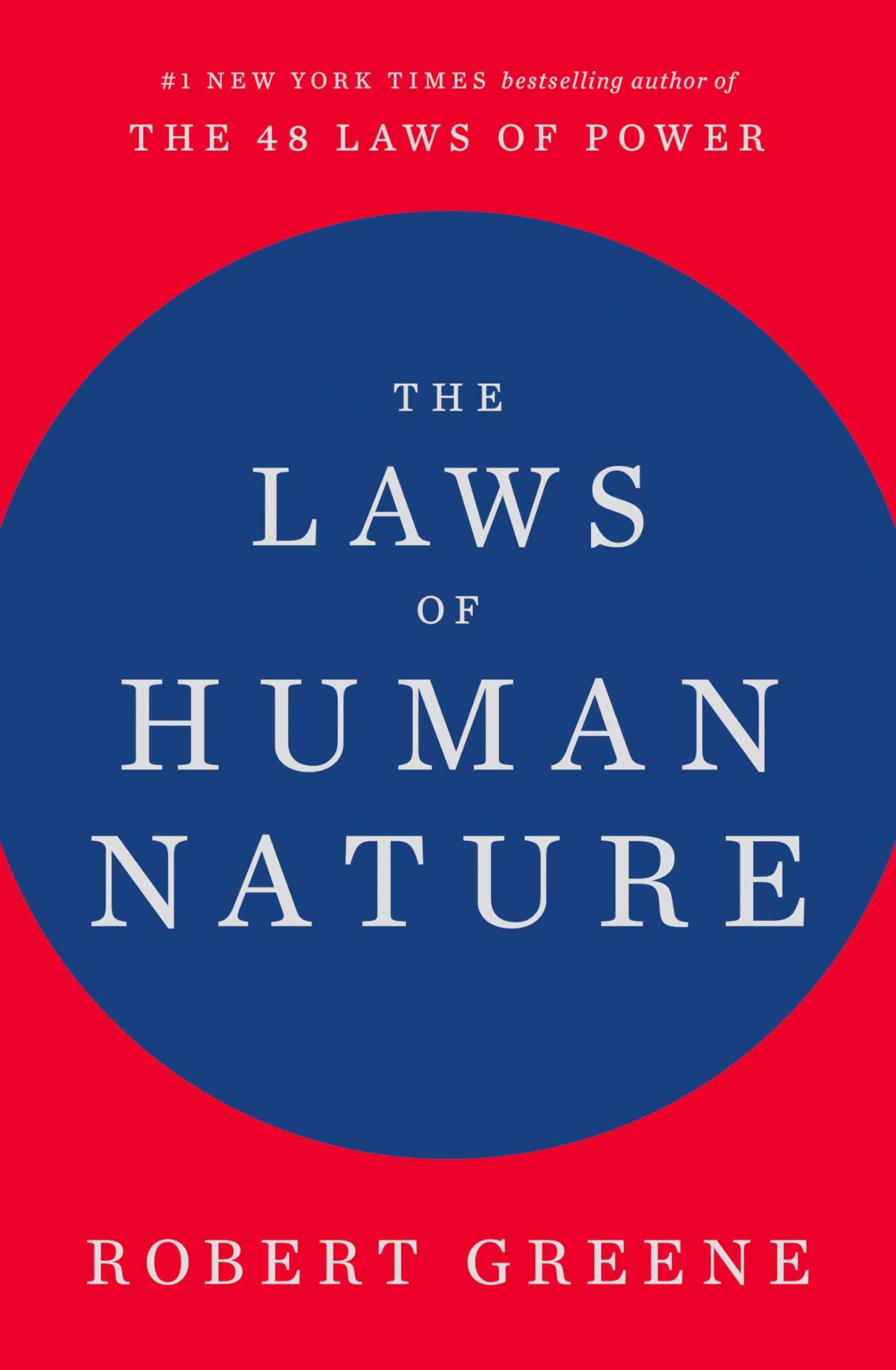
In The Laws of Human Nature, Robert Greene argues that we are social animals governed by deep seated, often unconscious evolutionary drives. He suggests that while we like to believe we are rational and autonomous, we are actually frequently controlled by emotions, biases, and the “shadow” sides of our personalities.
The book is structured around the 18 Laws, designed to help you decode human behavior, master your own emotions, and develop superior social intelligence – a toolkit essential for any visionary enterpreneur.
Greene emphasizes that you cannot understand others until you understand yourself.
To navigate the market and build a brand, you must see people as they truly are, not as they appear.
Greene provides strategies for leading and persuading without triggering resistance.
| Law | Key Insight | Entrepreneurial Application |
| Law 2: Narcissism | We are all self-absorbed to some degree. | Turn self-love into Empathy. Understanding customer needs better than they do is the source of all brand value. |
| Law 5: Covetousness | People desire what they don’t have. | Become an elusive object of desire. Use scarcity and mystery to build brand prestige. |
| Law 6: Shortsightedness | Most people focus on the immediate. | Maintain a long-term “Farsighted” perspective to anticipate market trends. |
| Law 13: Aimlessness | People feel lost without direction. | Advance with a clear sense of purpose. A brand with a “mission” attracts loyal followers. |
Greene often touches on the “biological” reality of our nature. He discusses how our brains are wired for survival in a tribal environment, which is why we feel such intense pressure to fit in or why stress causes us to revert to “low-grade” emotions. By treating human behavior as a chemical reaction – predictable and governed by specific triggers – you can remain a calm observer rather than a reactive participant.

This post was created with the aid of Google AI “Gemini” and is written for documentation and entertainment purposes only. Always do your own research and be skeptical about everything you see and read on the internet.
The idea that “words are best used to deceive” speaks to the power of language to manipulate perception, obscure truth, and present false information. While words can also be used to inform and connect, their very nature allows for manipulation through various linguistic and psychological techniques.
Deception is often achieved not just through outright lies, but also through careful word choice and structure:
Using less offensive or duller expressions to mask the harsh reality of a situation (e.g., “collateral” damage” for civilian causalities or “downsizing” for firing people).
Employing words like “maybe,” “possibly,” or “probably” to avoid committing to specific, verifiable story, leaving intentions ambiguous.
Using words with strong positive or negative emotional overtones to “whip up emotions” and mask the cognitive meaning, causing reason to be overlooked.
Liars often use fewer first-person pronouns (“I,” “I’m”) to create psychological distance form the lie and avoid ownership of the false statement (e.g., “Mistakes were made” instead of “I made a mistake”).
Sometimes deceivers use excessive technical details or overly formal words to appear credible or to hide the truth behind complexity (obfuscate).
Intentionally leaving out important information to create a false impression.
Misrepresenting the truth without telling a direct lie, often involving half-truths or irrelevant information (red herrings) that distract from the main point.
As the user’s statement suggests, some believe the primary or most effective use of words is manipulation, highlighting the inherent vulnerability of communication.
Researchers in psychology and linguistics study the language of deception as a behavior, analyzing specific linguistic cues and patterns that differentiate true from false statements to help in detection.
While acknowledging the potential for deceit, others emphasize that words also enable connection, information sharing, and truth-telling, and that the intent behind the words matters as much as the content.
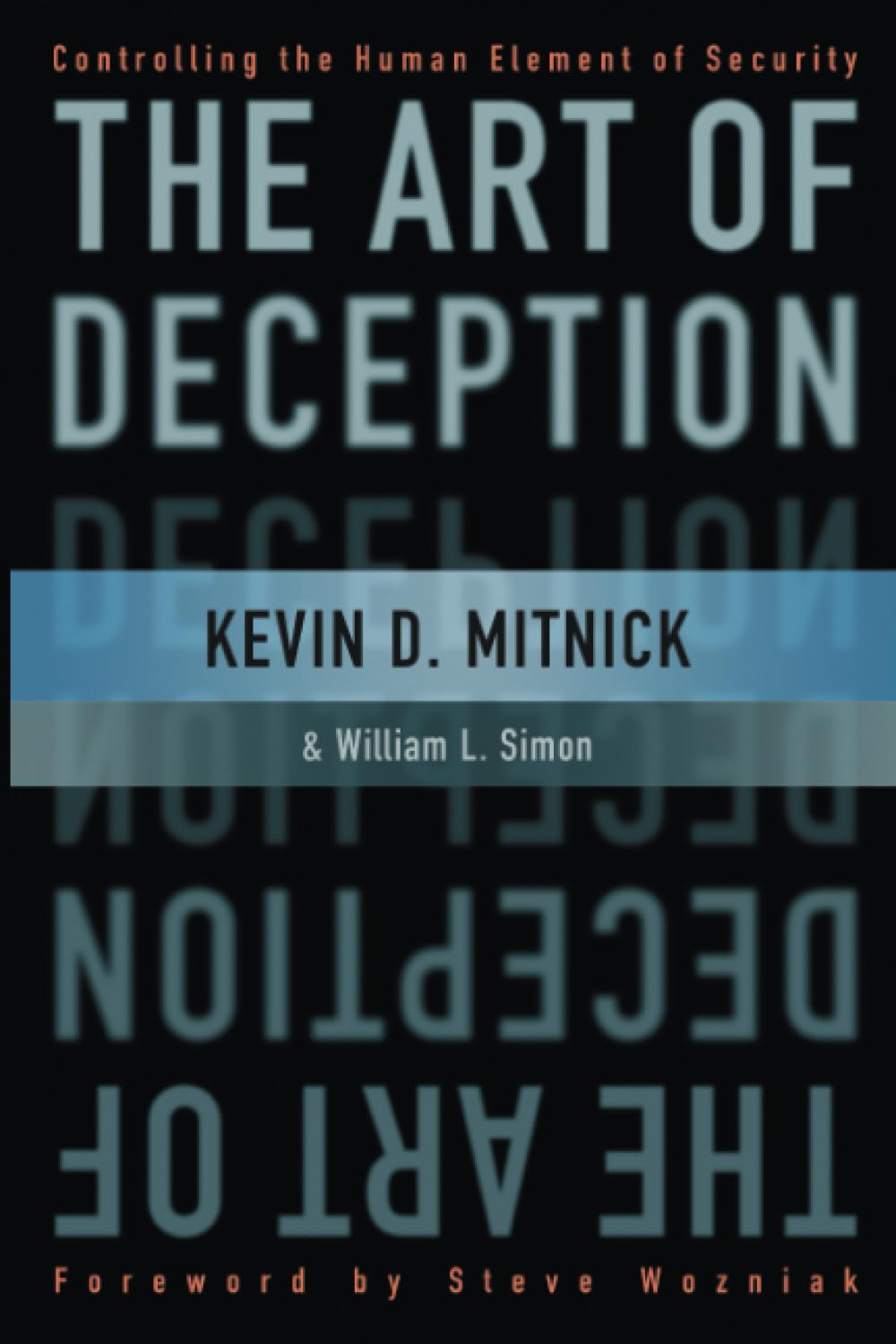
In The Art of Deception, Kevin D. Mitnick – once the world’s most wanted hacker – shifts the focus from technical firewalls to the “human firewall.” His central thesis is that the human element is the weakest link in any security chain. While companies spend millions of encryption and hardware, Mitnick demonstrates that a polite, well-informed social engineer can often bypass these systems simply by asking the right person for help.
Mitnick defines social engineering as the use of influence and persuasion to deceive people into revealing sensitive information. He argues that:
Technology alone creates an “illusion of security.”
Attackers leverage innate human traits like trust, the desire to be helpful, the tendency to follow authority, and the fear of getting into trouble.
The book is structured around fictionalized (but realistic) stories that illustrate specific manipulation tactics.
Creating a fabricated scenario (a “pretext”) to establish trust. An attacker might pose as a technician, a fellow employee, or an executive’s assistant.
Asking for a small, seemingly harmless piece of information first. Once the victim complies, they are psychologically more likely to agree to a larger, more sensitive request later.
The attacker creates a problem (e.g., a network crash) and then poses as the solution. The victim, feeling grateful, is less likely to question the “expert’s” credentials.
Using the names of high-ranking executives to intimidate lower-level employees into bypassing standard security protocols.
After each story, Mitnick provides an analysis of what went wrong and how to fix it. His recommendations for a “Human Firewall” include:
| Measure | Description |
| Verification Protocols | Never release information without verifying the identity of the requester through a call-back or official ID. |
| Security Awareness | Training employees to recognize “red flags,” such as urgency, requests for passwords, or uncharacteristic behavior from managers. |
| Information Classification | Treating even “innocuous” data (employee directories, internal jargon) as sensitive, as these are the tools attackers use to build credible pretexts. |
| The Power of “No” | Creating a corporate culture where employees feel empowered to say no to requests that violate security policy, regardless of the requester’s supposed rank. |
As an entrepreneur building a vision and a brand, this book is a reminder that your intellectual property and custom designs aren’t just protected by passwords. Your brand’s value is also held by your future employees and partners.
Building “security-conscious” operations from day one ensures that as your brand grows, your “ethical drive” is protected from those who would use deception for profit.

What needs doing? I need to clear up space so I can think clearer.
I want to put some things up for sale but I need somewhere to store them after.
I also want to make summary posts about the books that I’ve read.
I am going to clear out second shelf, take a book from the top (book) shelf, make a post about it and then place it on the second shelf.
There are so many things you can do when combining books with the power of blogging, the internet and AI. What a time to be alive.
I cannot wait for payday. I’m going to buy a whole kilogram of coffee. Nescafe classic, strong. Its my favorite coffee of all time. I won’t have to worry about coffee again for a whole month (hopefully).
Without further a due, I’m going to pick my first book of my bookshelf and make a post about it.
I just hoovered my room as I deemed it necessary. I also moved some furniture around to improve my workflow around the house.
The clothes are begging to be folded and stored neatly but I need to organize my shelves and make posts about all of the books before I can do that.
Become a paid subscriber to get access to the rest of this post and other exclusive content.
Become a paid subscriber to get access to the rest of this post and other exclusive content.
Become a paid subscriber to get access to the rest of this post and other exclusive content.
Become a paid subscriber to get access to the rest of this post and other exclusive content.

 ZutisBljeg