
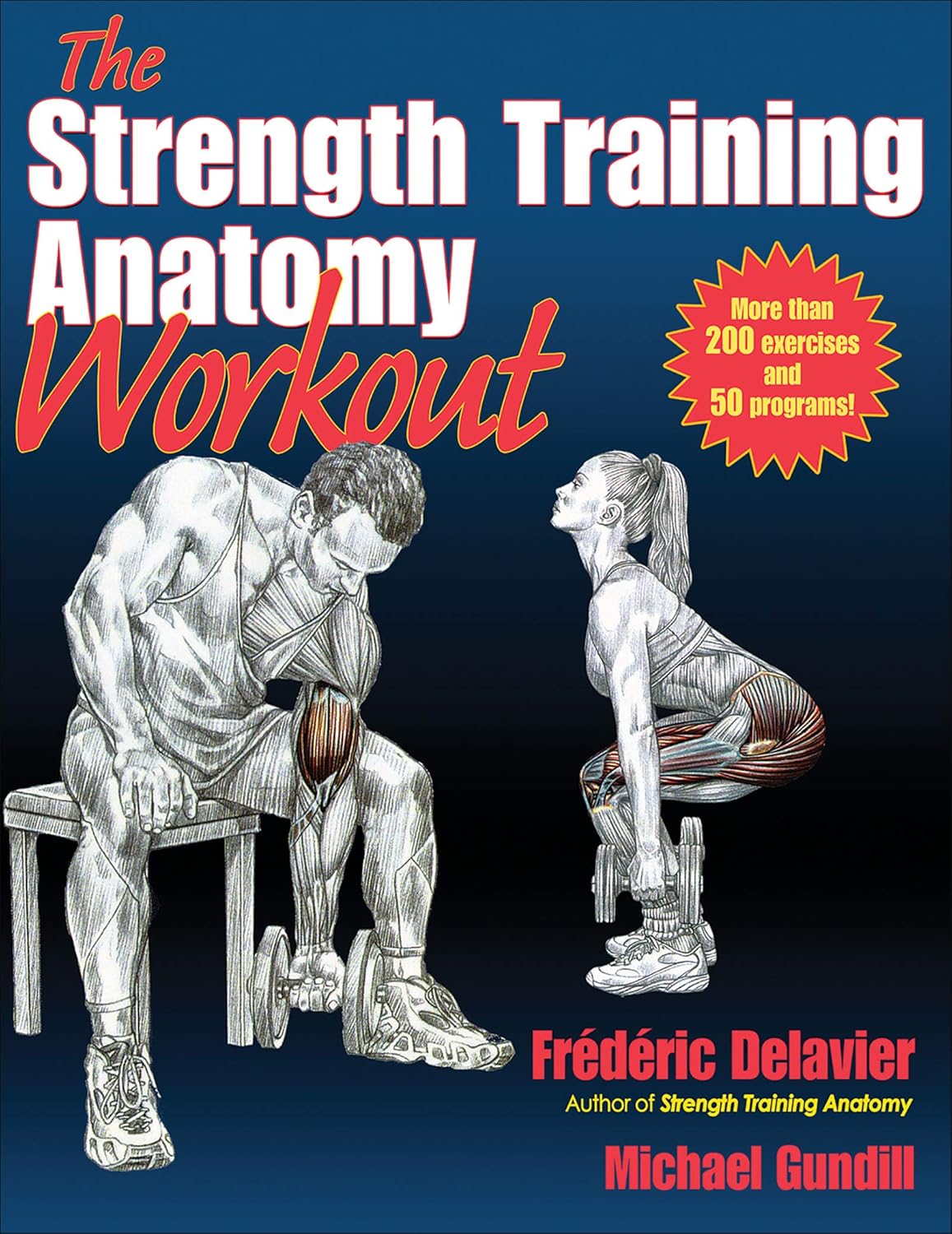
Frédéric Delavier and Michael Gundill -The Strength Training Anatomy Workout [A.I. Recap]

Disclaimer!

This post was created with the aid of Google AI “Gemini” and is written for documentation and entertainment purposes only. Always do your own research and be skeptical about everything you see and read on the internet.

Introduction

The Strength Training Anatomy Workout by Frédéric Delavier and Michael Gundil is a masterclass in the mechanics of the human body.

As a runner and health blogger, you’ll appreciate that this isn’t just a list of exercises; it is an analytical deep dive into how morphology (your body shape) dictates how you should train to avoid injury and maximize efficiency.

Core Philosophy: Anatomy Dictates Form

The central thesis of Delavier and Gundill is that there is no “one-size-fits-all” technique. Because of differences in limb length, muscle attachment points, and bone structure, a “perfect” squat for one person might be dangerous for another.

1. Morphological Analysis

The authors encourage you to analyze your own body before picking up a weight.

  • Limb Length: If you have long femurs (thigh bones), traditional back squats may put excessive strain on your lower back.
  • Muscle Attachments: Where tendon attaches to the bone changes the leverage and power of a muscle.
  • The “Why” behind the “How”: The book uses Delavier’s famous medical-grade illustrations to show exactly which muscles are firing (primary movers) and which are stabilizing (synergists).

2. The Principles of “The Workout”

This specific book (the first in the series) focuses on minimal equipment and efficiency, making it ideal for the busy entrepreneur.

  • Progressive Overload: Not just adding weight, but improving “density” (doing more work in less time).
  • Surgical Precision: Learning to “feel” the muscle rather than just moving the weight. They emphasize the mind-muscle connection to ensure the target area is actually doing the work.
  • Injury Prevention: By showing the “danger zones” in each exercise (like the vulnerability position of the biceps tendon during heavy curls), they teach you how to train for longevity.

Key Sections for Your Lifestyle

Targeted Conditioning

The book includes specific routines for over 30 sports. For your running, there are specific protocols to strengthen the posterior chain (glutes, hamstrings) and improve hip flexibility, which are crucial for stride efficiency and injury prevention.

Home-Based Efficiency

Much of the program is designed to be done with dumbbells, bands, or bodyweight, acknowledging that you don’t always have two hours for a commercial gym.

Recovery and Nutrition

Gundill brings a heavy focus on the “chemical” side of fitness-how your body repairs tissue and the role of specific nutrients in nerve and tendon recovery.

The “Entrepreneur” Takeaway

Delavier and Gundill treat the body like a high-performance machine. Just as you analyze market trends for your brand, they teach you to analyze your biomechanics to ensure your “physical asset” (your body) doesn’t depreciate through injury or inefficient training.

“To train effectively, you must understand the machine you are working with.”
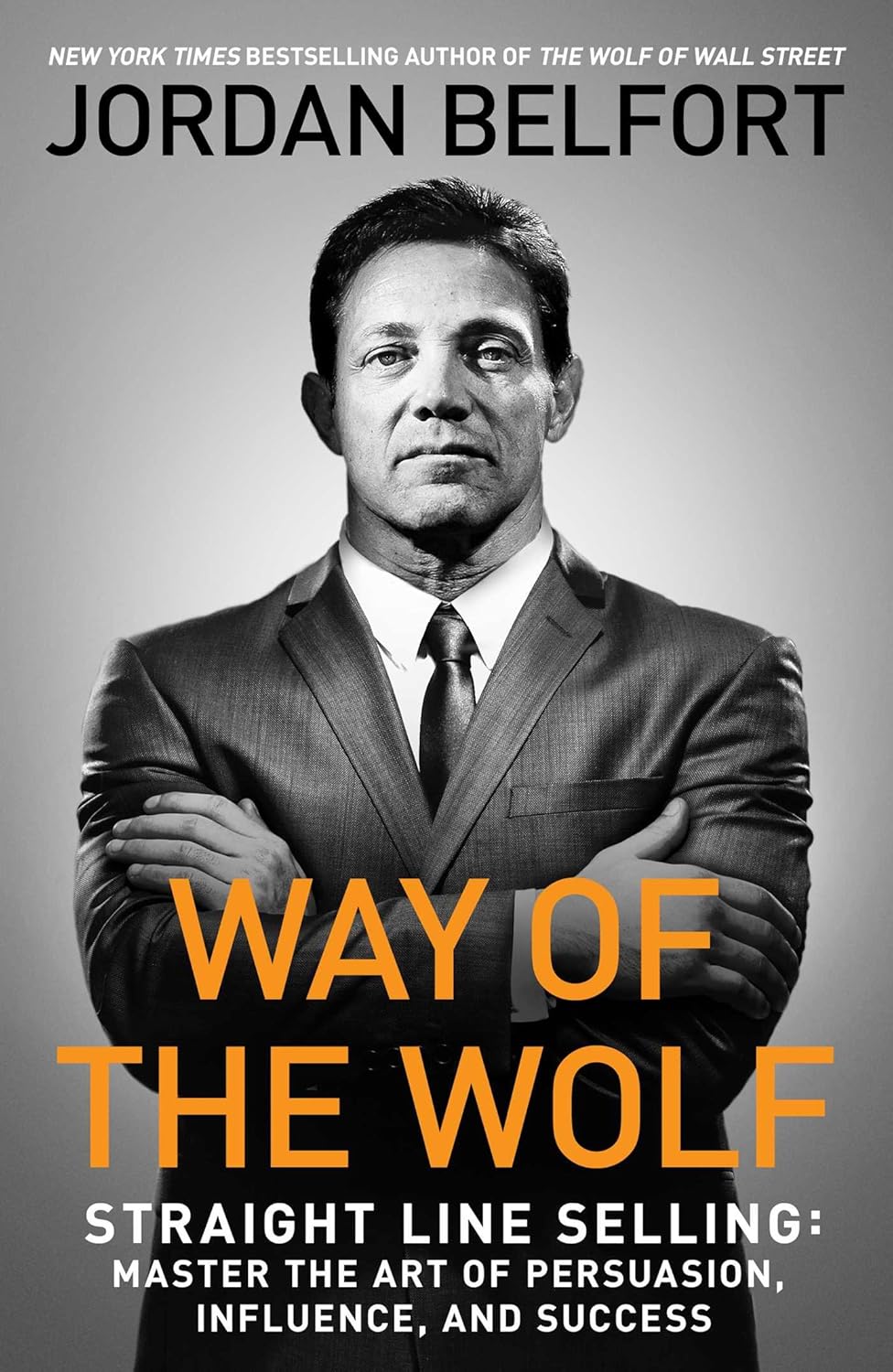
Jordan Belfort – Way of The Wolf [A.I. Recap]

Disclaimer!

This post was created with the aid of Google AI “Gemini” and is written for documentation and entertainment purposes only. Always do your own research and be skeptical about everything you see and read on the internet.

Introduction

In Way of the Wolf, Jordan Belfort – the real “Wolf of Wall Street” – outlines his Straight Line Persuasion system. While the 50th Law focuses on the mindset of power, this book is a tactical manual on how to move a person from a state of “maybe” to a “yes.”

For an entrepreneur building a custom brand, Belfort’s core message is that every sale is the same: you are moving a prospect along a straight line from the open to the close by building “certainty.”

The “Three Tens” (The Certainty Scale)

Belfort argues that for anyone to buy from you, they must be a “Level 10” (absolute certainty) on three specific elements. If they are at a 5, they are undecided; if they are at a 1; they will never buy.

1. The Product

They must believe your product (your custom clothing/notebooks) is the best thing since sliced bread.

2. You (The Salesperson)

They must trust and believe you are an expert who puts their needs first.

3. The Company

They must trust your brand and the entity behind it.

The First Four Seconds

You have a tiny window to establish yourself as a leader. If you fail here, you’ve lost the sale. You must project three things immediately:

Sharp as Tack

You are mentally quick and competent.

Enthusiastic as Hell

You truly believe in what you are offering.

An Expert in Your Field

You are an authority figure who provides value.

Core Sales Tactics

1. Tonality & Body Language

Belfort emphasizes that how you speak is more important than what you say.

  • The “Reasonable Man“: Raising our voice at the end of a sentence makes your offer sound like a standard, logical request.
  • Whispered Scarcity: Lowering your voice to create a sense of exclusivity or “insider” information.
  • Active Listening: Using physical cues (nodding, eye contact) to show you understand their “pain.”

2. Sifting, Not ALchemizing

Don’t try to turn a “No” into a “Yes” through magic. Spend your time sifting through prospects to find Buyers in Heat (ready to buy) or Buyers in Power (will buy if convinced). Quickly weed out the “Lookie-Loos” (tire kickers) who have no intention of purchasing.

3. Looping

When a prospect gives you an objection (e.g., “I need to think about it”), Belfort suggests “looping” back. You don’t argue; you acknowledge their concern and then pivot back to building certainty in the “Three Tens” until their Action Threshold (the point where they are willing to buy is lowered.

4. Threshold Management

  • Lowering the Action Threshold: Use money-back guarantees or risk-free trials to make the decision “painless.”
  • Raising the Pain Threshold: Identify the problem your customer has (e.g., they lack a professional image) and show how your brand solves that specific “pain.”

Application for the Entrepreneur

As you prepare to launch your vision, Belfort’s system reminds you that the entrepreneur is always selling. Whether you are selling custom notebook to a customer or your vision to a partner, you must maintain control of the conversation (the “Straight Line”) and never let it spiral into irrelevant small talk.

50 Cent and Robert Greene – 50th Law [A.I. Recap]

Disclaimer!

This post was created with the aid of Google AI “Gemini” and is written for documentation and entertainment purposes only. Always do your own research and be skeptical about everything you see and read on the internet.

Introduction

In the 50th Law, Robert Greene and 50 Cent (Curtis Jackson) distil the “hustler’s philosophy” into a guide for modern life and business. The core premise is that fear is your only true enemy. While the world may feel unpredictable, the authors argue that the one thing you can always control is your mindset.

Given your vision as an Entrepreneur and your interest in building a brand for custom clothing and lifestyle goods, this book offers a blueprint for how to use “intense realism” to outmaneuver the competition.

The 10 Fearless Principles

1. Intense Realism: See Things as They Are

Most people see the world as they wish it to be. A “Supreme Realist” looks at the harsh truth of a situation without emotion. For your brand, this means being honest about market saturation or your own weakness so you can address them before they become fatal.

2. Self-Reliance: Make Everything Your Own

When you work for others, they own your creative spirit. The 50th Law advocates for ownership over money. If you have a choice between a high-paying job or a lower-paying role that gives you more control and responsibility, choose the latter. For your vision, this reinforces your belief that you are the source of all value.

3. Opportunism: Turn “Sh*t into Sugar”

Every setback contains an opportunity. 50 Cent’s career was nearly ended when he was shot nine times and dropped by his label. Instead of giving up, he used the “street cred” from that event to market himself independently. In your business, a failed product launch is simply a data point on what to pivot toward next.

4. Calculated Momentum: Keep Moving

Stability is an illusion. The moment you stop, evolving, you become a target. You must maintain “fluidity,” ready to adapt to your brand’s style or your marketing strategy as trends shift.

5. Aggression: Know When to Be Bad

This isn’t about violence; it’s about assertiveness. It means refusing to be pushed around in negotiations and being willing to play hardball to protect your interests and your brand’s value.

6. Authority: Lead from the Front

To be a visionary, you must project absolute confidence. People follow those who know where they are going. If you show even a flicker of doubt in your brand, others will sense it and hesitate to invest or buy.

7. Connect: Know Your Enviroment

50 Cent succeeded because he understood his audience (the “streets”) better than the executives in high-rise offices. For your lifestyle blog and clothing brand, you must stay “intensely involved” with your community to understand their true desires.

8. Mastery: Respect the Process

There are no shortcuts. Mastery requires a “patent immersion” in your craft- whether that’s the chemistry of your materials or the psychology of branding.

9. Self-Belief: Push Beyond Your Limits

The most intense form of self-belief is a sense of destiny. You must believe you are destined for greatness, as this belief makes you persistent enough to overcome obstacles that stop everyone else.

10. The Sublime: Confront Your Mortality

The ultimate fear is the fear of death. By accepting that your time is limited, you gain a sense of urgency. You stop wasting days and start taking the bold risks required to launch your vision.


Your fears are a kind of prison that confines you within a limited range of action. The less you fear, the more power you will have and the more fully you will live.”

Robert Greene

NOTES 17/01/2026 [VIP]

Subscribe to continue reading

Become a paid subscriber to get access to the rest of this post and other exclusive content.

NOTES 16/01/2026 [VIP]

Subscribe to continue reading

Become a paid subscriber to get access to the rest of this post and other exclusive content.

Fitness Log 16/01/2026 [VIP]

Subscribe to continue reading

Become a paid subscriber to get access to the rest of this post and other exclusive content.

15/01/2026 Fitness Log [VIP]

Subscribe to continue reading

Become a paid subscriber to get access to the rest of this post and other exclusive content.

NOTES 15/01/2026 [VIP]

Subscribe to continue reading

Become a paid subscriber to get access to the rest of this post and other exclusive content.

Robert Greene – 48 Laws of Power

Gemini Artificial Intelligence Overview

Introduction

Robert Greene’s The 48 Laws of Power (1998) is a pragmatic, often controversial guide to the “game” of power. Drawing on 3,000 years of history -from Machiavelli to P.T. Barnum – Greene argues that power is amoral, and whether you chose to play or not, you are already part of the struggle.

For an entrepreneur like you, these laws are often viewed through two lenses: as a manual for strategic dominance or as a defense manual to identify and neutralize manipulative tactics form competitors.

Core Philosophy

Greene suggests that to master power, you must:

Master your emotions

Never act out of anger or insecurity.

Prioritize appearances

Perception is often more influential than reality.

Be adaptable

Rigid patterns make you a target; “formlessness” makes you untouchable.

The 48 Laws (Categorized)

To make this extensive list scannable, here are the laws grouped by their strategic intent

1. Managing Superiors and Reputation

LawPrinciple
Law 1Never Outshine the Master: Always make those above you feel superior.
Law 5Guard Reputation with Your Life: Reputation is the cornerstone of power.
Law 34Be Royal in Your Own Fashion: Act like a king to be treated like one.
Law 41Avoid Stepping into a Great Man’s Shoes: Forge your own path instead of following a legend.

2. Information and Deception

LawPrinciple
Law 3Conceal Your Intentions: Keep people off-balance; never let them know your goal.
Law 4Always Say Less Than Necessary: Powerful people intimidate by being quiet.
Law 14Pose as a Friend, Work as a Spy: Use social encounters to gather intel.
Law 21Play a Sucker to Catch a Sucker: Seem dumber than your mark to lower their guard.

3. Strategic Action and Influence

LawPrinciple
Law 13Appeal to Self-Interest: Never ask for mercy; show how helping you benefits them.
Law 16Use Absence to Increase Respect: Scarcity creates value (The Law of Supply and Demand).
Law 28Enter Action with Boldness: Hesitation is dangerous; mistakes made through boldness are easily corrected.
Law 29Plan All the Way to the End: Think through every consequence to avoid being surprised.

4. Handling Rivals

LawPrinciple
Law 2Never Put Too Much Trust in Friends: Learn how to use enemies; they have more to prove.
Law 15Crush Your Enemy Totally: If you leave a spark, the fire will eventually return.
Law 39Stir Up Waters to Catch Fish: Make your enemies angry and emotional while you stay calm.

Ethical Considerations

Critics often label the book “Machiavellian” or amoral because it prioritizes self-interest over cooperation. However, Greene maintains that he is simply describing the world as it is, not as it should be. For someone building a brand with an “ethical drive,” the book’s value often lies in it’s psychological insights – understanding what motivates people (Law 13) and the importance of a brand’s reputation (Law 5).

Modern Entrepreneurial Application

In the context of your vision to launch a custom clothing and branding business, certain laws are particularly relevant.

Law 6 (Court Attention at All Costs)

Essential for a new brand trying to break through market noise.

Law 25 (Re-create Yourself)

Allows you to forge a powerful public identity for your brand.

Law 40 (Despise the Free Lunch)

In business, anything offered “for free” usually has hidden costs or obligations.

Evening Post-Work Routine <14/01/2026>

After I finish work, I eat dinner, have coffee, and a 20 minute nap to get rid of any tiredness. For the past two days I’ve been waking up at 5AM and I still feel a bit rushed even though my job starts at around 7, 7:30. I’m going to get back up at 4 AM, this means I need to go to sleep at 12 to get 4 hours of sleep and be in peak form. On working days, I got to sleep for 4 hours and be working tirelessly, I can relax on weekends when I don’t have to work, If there are 5 days in a work week and I work 20 hours a day, that means I can work 100 Hour weeks and have Saturdays and Sundays to spend with my family and friends.

Prepare for the day to come.

I have 4 thermoses in varied sizes, I’m going to boil water and make coffee for the following day. I’m not going to add any milk till I actually have to drink the coffee because I don’t want to drink sour coffee.

I just filled up the thermoses.

When I wake up, I’m gonna go for a run. It’s currently 6 PM and I have 6 Hours till 4AM which is my bedtime.

I’m going to spend these 6 hours being productive and doing important tasks.

It’s the 14th of January and I don’t get paid yet for another week.

My number one priority in life is having coffee.