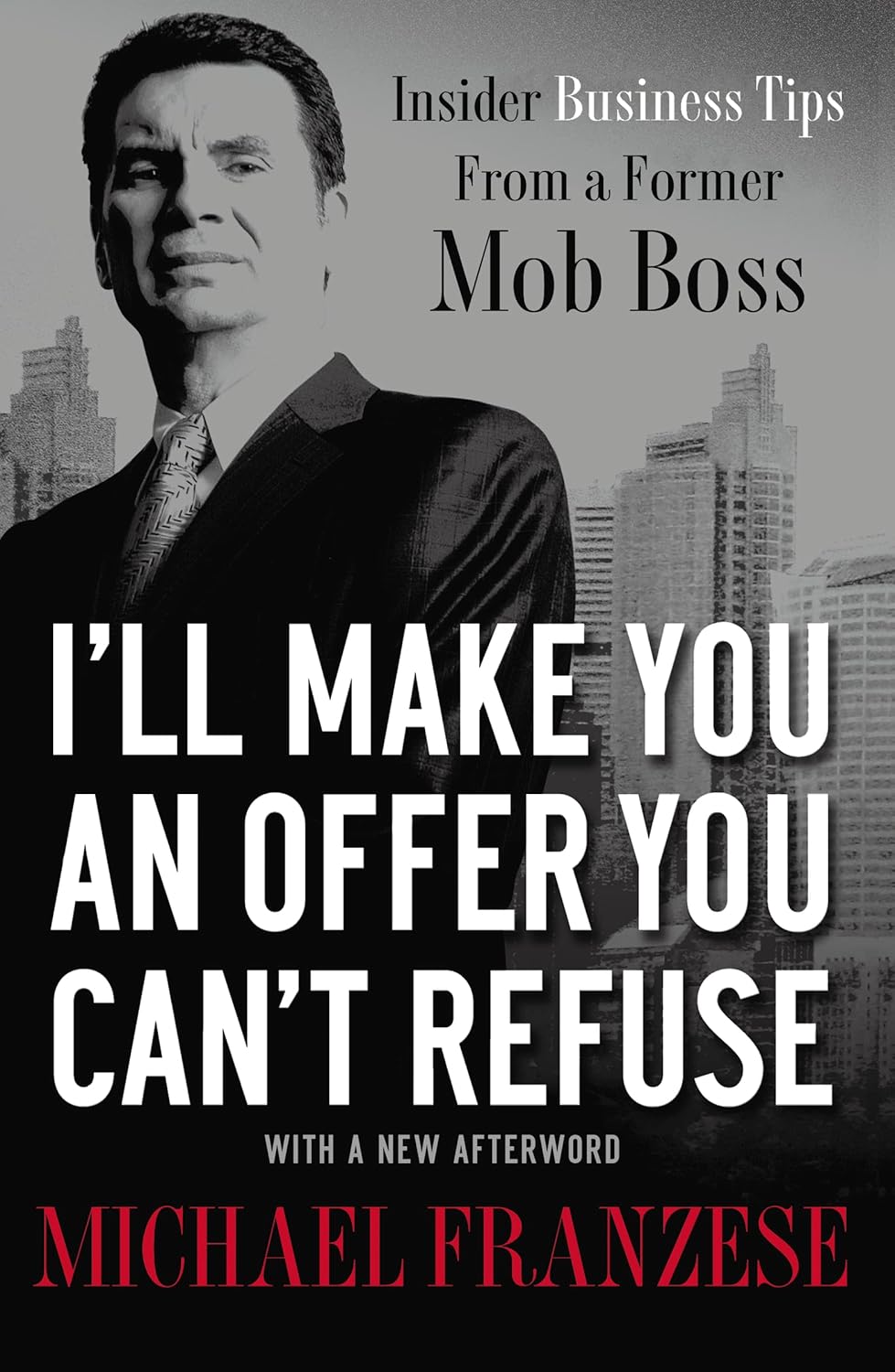
Michael Franzese – I’ll Make You an Offer You Can’t Refuse [A.I. Recap]

Disclaimer!

This post was created with the aid of Google AI “Gemini” and is written for documentation and entertainment purposes only. Always do your own research and be skeptical about everything you see and read on the internet.

Introduction

In “I’ll Make You an Offer You Can’t Refuse,” Michael Franzese – a former “Capo” in the Colombo crime family – takes the hard-earner lessons of the “Mob” and applies them to legitimate business. For a visionary entrepreneur like you, this book is about business “street smarts” and the ruthless pursuit of efficiency, though redirected toward ethical and legal success.

Franzese’s core philosophy is that “the business of business is business,” and he emphasizes a “no-nonsense” approach to building a brand.


1. The Power of the “Sit-Down”

In the underworld, a “sit-down” was a meeting to resolve disputes. In your business world, it’s about high-stakes negotiation.

Listen More, Talk Less

Franzese echoes the keys to effective communication. By letting the other person talk, you gather “intelligence” and reveal your own hand only when necessary.

Keep Your Cool

Never let emotions dictate your business decisions. If you lose your temper, you lose your leverage.

Mutually Beneficial Outcomes

Even in the mob, the best deals were those where everyone made money. This aligns perfectly with your goal to benefit all parties involved.

2. The “Machiavellian” Manager (With Integrity)

Franzese discusses leadership through the lens of respect rather than fear.

Lead by Example

You cannot expect your team to have an “ethical drive” if you don’t display it yourself.

Be Decisive

Hesitation is a business killer. Use your market awareness to make a call and stick to it.

Identify the “Snakes”

Echoing Eriksson’s warnings about narcissists, Franzeses tells you to prune your circle quickly if someone shows they aren’t loyal to the vision.

3. Business Strategy: The “Mob” Way

Keep It Simple

Don’t overcomplicate your business model. If you can’t explain your brand’s value (your notebooks, pens, clothing) in a few sentences, you don’t understand it well enough.

Cutting Overhead

Franzese is obsessed with the “bottom line.” He encourages you to be lean and avoid unnecessary expenses that don’t add value to the brand.

The importance of a “Rabbi”

Everyone needs a mentor – someone who has been there before and can provide the “chemistry” of experience to help you avoid pitfalls.

4. Ethics and the “Second Chance”

A significant portion of the book is dedicated to Franzese’s transition to a legitimate life.

Integrity is Your Best Asset

Once you lose your reputation, you’ve lost your business.

The Ethical Edge

He argues that doing business honestly is actually more profitable in the long run because it builds a sustainable “brand” that people trust.


Why this fits your Vision

Franzese’s advice is for the “Entrepreneur” who isn’t afraid of the grind. It complements your market awareness by adding a layer of tactical pragmatism. You are the source of value, but Franzese teaches you how to protect that value from those who might try to take a “piece of the action” without contributing.


Janet L. Jackson and Debra A. Bekerian – Offender Profiling: Theory, Research and Practice [A.I. Recap]

Disclaimer!

This post was created with the aid of Google AI “Gemini” and is written for documentation and entertainment purposes only. Always do your own research and be skeptical about everything you see and read on the internet.

Introduction

In Offender Profiling: Theory, Research and Practice, Janet L. Jackson and Debra A. Bekerian move away from the “intuitive” guesswork often seen in movies and provide a scientific, evidence-based framework for understanding behavior.

As a visionary entrepreneur, this book is valuable because it teaches you how to reverse-engineer actions to understand the mind behind them. It’s about “Behavioral Consistency” – the idea that how someone does one thing is often how they do everything.

The Core Methodology: Linking Action to Identity

The book focuses on how psychologists and police link a series of actions to a specific “type” of person. For your business, this is the ultimate tool for competitor analysis and customer persona building.

1. The Disorganized vs. Organized Dichothomy

The authors discuss the classic distinction in profiling:

  • Organized: High intelligence, socially competent, plans meticulously, and follows a “straight line.” These individuals are harder to catch (or compete with) because they leave little to chance.
  • Disorganized: Impulsive, lower social competence, and acts on emotion. Their “brand” is chaos.
  • Entrepreneur Insight: In the market, you want to be “Organized” force. You want a vision so tight and a strategy so planned that your brand’s presence feels intentional and unshakeable.

2. Behavioral Consistency & The “Signature”

A key theme is that while a “modus operandi” (MO) can change (how someone does a task), their “signature” (the psychological why) usually stays the same.

  • Application: When you look at other brands in the custom clothing space, don’t just look at their products. Look for their “signature.” Do they always cut costs on materials? Are they obsessed with status? Understanding their “why” helps you find the gaps in the market you can fill.

3. Geographical Profiling (Circle Theory)

The book explores how offenders usually operate within a specific “comfort zone.”

  • Application: In your lifestyle blog and brand, you have a “comfort zone” or niche. This book teaches you to map out your territory. Where does your brand “live” in the mid of the consumer? By understanding the geography of your market, you can expand strategically rather than randomly.

4. The Limits of Intuition

Jackson and Bekerian are critical of “gut feelings.” They argue for data-driven decisions.

  • The Lesson: You are the source of the vision, but your “market awareness” must be backed by research. Don’t just assume what people want in a custom notebook; profile your target audience based on their actual buying habits and digital “footprints.”

Comparing the “Profiler” to the “Entrepreneur”

Profiling ConceptEntrepreneurial Translation
Linkage AnalysisConnecting different market trends to see the “big picture.”
VictimologyIdentifying the “Pain Points” of your target customer.
StagingRecognizing when a competitor is “faking” their brand value.
Data IntegrationUsing chemistry, lifestyle trends, and sales data to launch your vision.

Why This Matters for Your Launch

You mentioned you are the Entrepreneur with the ethical drive. Offender profiling is essentially the study of people who lack that drive. By studying these theories, you gain a “defensive” mastery – you learn how to spot “disorganized” patterns or “predatory” competitors before they can impact your brand’s value.

“Behavior is not a random occurrence; it is a reflection of an individual’s psychological makeup and their interaction with the environment.”

Peter B. Ainsworth – Psychology and Crime [A.I. Recap]

Disclaimer!

This post was created with the aid of Google AI “Gemini” and is written for documentation and entertainment purposes only. Always do your own research and be skeptical about everything you see and read on the internet.

Introduction

In Psychology and Crime, Peter B. Ainsworth, explores the intersection of psychological theory and the criminal justice system. Unlike the aggressive “Hustler” mentality of 50 Cent or the sales-driven focus of Jordan Belfort, Ainsworth takes an academic and analytical approach to understand human behavior at its most deviant.

For an entrepreneur, this book provides a deep dive into social psychology – understanding how people think, why they break rules, and how to read the “chemistry” of human interaction.

Core Themes of the Book

1. Theories of Crime Causation

Ainsworth examines why people commit crimes, moving through several psychological lenses:

  • Biological/Social Learning: Is “criminality” inherited or learned? Ainsworth leans toward the idea that environmental factors and “modeling” (watching others) play a massive role.
  • Rational Choice Theory: This aligns with your interest in market awareness. It suggests that many criminals make a “cost-benefit” analysis before acting. They weigh the risk of being caught against the potential reward.

2. The Fallibility of memory (Eyewitness Testimony)

One of the most critical sections for any leader is Ainsworth’s look at how easily the human mind is deceived.

  • Reconstructive Memory: People don’t “replay” events, they reconstruct them based on expectations and biases.
  • Application: In business, this reminds you that two people can leave the same meeting with completely different “truths.” Documentation and “intense realism” (Greene) are your defenses against this.

3. Investigative Psychology & Profiling

Ainsworth critiques the “Hollywood” version of profiling. He emphasizes that:

  • Consistency: Offenders often show a “signature” or consistent pattern in how they approach a task.
  • The Environment: The “where” and “how” of a crime often tell you more about the person’s background than their psychological “type.”

4. The Psychology of the Courtroom

Ainsworth details how persuasion works in a legal setting, which parallels Bertolt’s tactics. He explores how:

  • Attractiveness & Confidence: Juries are more likely to believe a witness who appears confident and “sharp,” regardless of the accuracy of their testimony.
  • The Power of Label: Once someone is labeled a “criminal” or “outsider,” it changes how every subsequent action they take is perceived.

Strategic Takeaways for the Entrepreneur

Understanding Deviance

As you build your brand, understanding why people “cut corners” or act unethically can help you build robust systems to protect your “source of value.”

Reading the Room

Ainsworth’s insights into body language and “interrogation” tactics can be inverted to help you high-stakes negotiations or when vetting potential partners.

Social Influence

The book explains how groups can influence an individual to act against their own best interest – a concept you can use to understand (and lead) consumer behavior and brand loyalty.

Integrating the “Ainsworth Lens” with your Vision

ConceptApplication to Your Brand
Cognitive BiasRecognizing that your customers’ perception is their reality.
Rational ChoiceEnsuring the “reward” of buying your brand far outweighs the “cost.”
Environmental InfluenceCreating a brand “lifestyle” that encourages the behavior you want to see.

Ainsworth teaches that while we like to think we are unique, human behavior follows remarkably predictable patterns. Mastering these patterns gives you a “chemical” advantage in both lifestyle blogging and business.

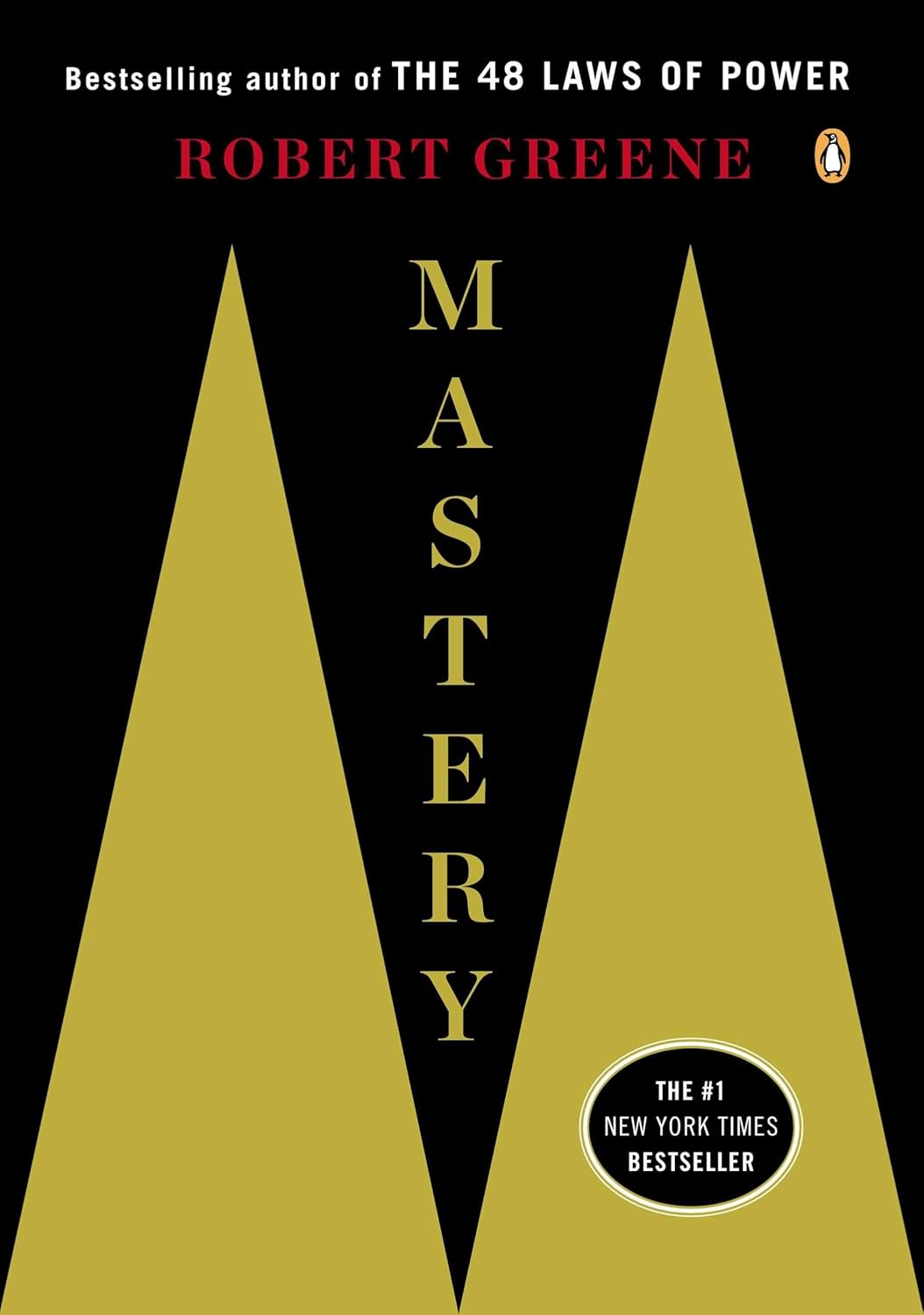
Robert Greene – Mastery [A.I. Recap]

Disclaimer!

This post was created with the aid of Google AI “Gemini” and is written for documentation and entertainment purposes only. Always do your own research and be skeptical about everything you see and read on the internet.

Introduction

In Mastery, Robert Greene debunks the myth that “genius” is an innate gift. Instead, he argues that Mastery is a rigorous process available to anyone who follows a specific path. For a visionary entrepreneur like you, this book serves as a roadmap for turning your creative drive into a world-class brand.

Greene posits that we all process an “Inner Force” that guides us as children. Mastery is the act of reconnecting with that force and subjecting it to intense discipline.

The Three Phases of Mastery

1. The Apprenticeship Phase (The “Learning” Years)

Before you can lead, you must learn. This phase isn’t about money or status; it’s about transformation.

  • Deep Observation: Enter a new environment and watch the power dynamics and “chemistry” of the industry without judging.
  • Skills Acquisition: Focus on one skill at a time. Through repetition, the skill moves from the conscious mind to the “hard-wired” nervous system.
  • The Mentor Connection: Find a mentor to compress time. A mentor gives you the “distilled” knowledge of their decades in a few years.

2. The Creative-Active Phase (The “Doing” Years)

Once you understand the rules, you ,must begin to break them.

  • The Dimensional Mind: Avoid becoming a “specialist” who is rigid. Stay open to new ideas and cross-pollinate concepts (e.g., combining your interest in chemistry with apparel design).
  • The Creative Breakthrough: This comes from “tinkering” and willingness to fail. You use the “intense realism” of the 50th Law to see what works in the market and what doesn’t.

3. Mastery (The “Intuition” Years)

At this stage, you have spent so many hours (the 10,000 – hour rule) that you no longer need to think. You have a “high-level intuition” for your craft. You can see the “whole” rather than just the parts.

The 5 Strategies for Finding Your “Life’s Task”

Greene argues that your “Life’s Task” is the source of all your value. To find it, you must:

  • 1. Return to your origins: What were you obsessed with as a child?
  • 2. Occupy the perfect niche: Don’t complete in a crowded field; create your own (the “Darwinian Strategy”).
  • 3. Avoid the false path: Don’t pursue a career for money or to please others.
  • 4. Let go of the past: Be willing to pivot if your current path no longer serves your vision.
  • 5 . Find your way back: If you’ve strayed, use your current frustrations as fuel to return to your true calling.

Key Pillars for the Entrepreneur

Social Intelligence

To master a field, you must master people. You must see others as they are, not as you want them to be, to avoid being sabotaged.

The Resistance Practice

Lean into the things that are difficult. If a certain part of your business (like the logistics of custom branding) feels hard, that is exactly where you need to focus.

Time is Your Greatest Ally

Mastery requires patience. While the “Straight Line” (Belfort) gets you the sale today, Mastery ensures your brand is still worth value 20 years from now.

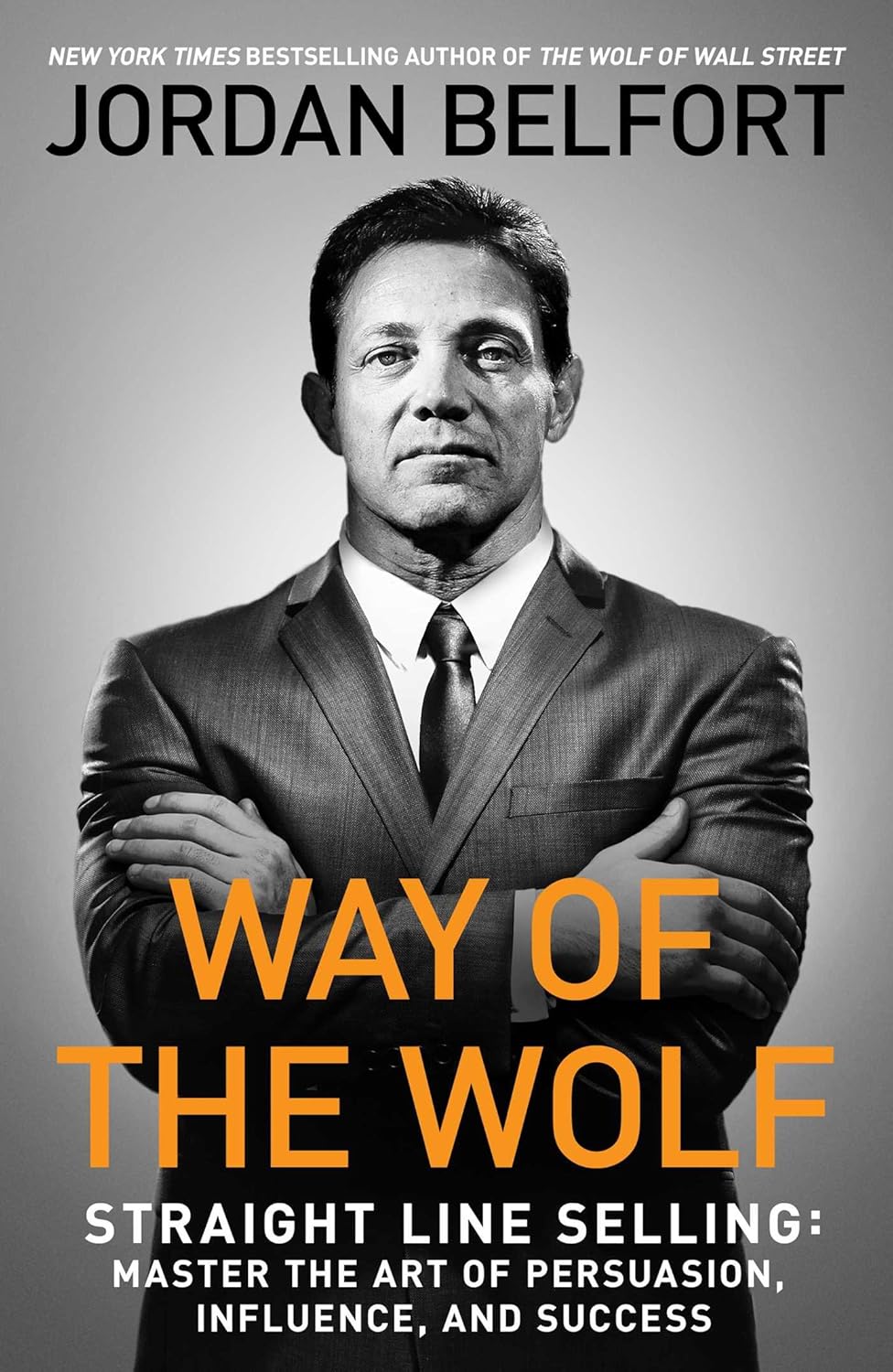
Jordan Belfort – Way of The Wolf [A.I. Recap]

Disclaimer!

This post was created with the aid of Google AI “Gemini” and is written for documentation and entertainment purposes only. Always do your own research and be skeptical about everything you see and read on the internet.

Introduction

In Way of the Wolf, Jordan Belfort – the real “Wolf of Wall Street” – outlines his Straight Line Persuasion system. While the 50th Law focuses on the mindset of power, this book is a tactical manual on how to move a person from a state of “maybe” to a “yes.”

For an entrepreneur building a custom brand, Belfort’s core message is that every sale is the same: you are moving a prospect along a straight line from the open to the close by building “certainty.”

The “Three Tens” (The Certainty Scale)

Belfort argues that for anyone to buy from you, they must be a “Level 10” (absolute certainty) on three specific elements. If they are at a 5, they are undecided; if they are at a 1; they will never buy.

1. The Product

They must believe your product (your custom clothing/notebooks) is the best thing since sliced bread.

2. You (The Salesperson)

They must trust and believe you are an expert who puts their needs first.

3. The Company

They must trust your brand and the entity behind it.

The First Four Seconds

You have a tiny window to establish yourself as a leader. If you fail here, you’ve lost the sale. You must project three things immediately:

Sharp as Tack

You are mentally quick and competent.

Enthusiastic as Hell

You truly believe in what you are offering.

An Expert in Your Field

You are an authority figure who provides value.

Core Sales Tactics

1. Tonality & Body Language

Belfort emphasizes that how you speak is more important than what you say.

  • The “Reasonable Man“: Raising our voice at the end of a sentence makes your offer sound like a standard, logical request.
  • Whispered Scarcity: Lowering your voice to create a sense of exclusivity or “insider” information.
  • Active Listening: Using physical cues (nodding, eye contact) to show you understand their “pain.”

2. Sifting, Not ALchemizing

Don’t try to turn a “No” into a “Yes” through magic. Spend your time sifting through prospects to find Buyers in Heat (ready to buy) or Buyers in Power (will buy if convinced). Quickly weed out the “Lookie-Loos” (tire kickers) who have no intention of purchasing.

3. Looping

When a prospect gives you an objection (e.g., “I need to think about it”), Belfort suggests “looping” back. You don’t argue; you acknowledge their concern and then pivot back to building certainty in the “Three Tens” until their Action Threshold (the point where they are willing to buy is lowered.

4. Threshold Management

  • Lowering the Action Threshold: Use money-back guarantees or risk-free trials to make the decision “painless.”
  • Raising the Pain Threshold: Identify the problem your customer has (e.g., they lack a professional image) and show how your brand solves that specific “pain.”

Application for the Entrepreneur

As you prepare to launch your vision, Belfort’s system reminds you that the entrepreneur is always selling. Whether you are selling custom notebook to a customer or your vision to a partner, you must maintain control of the conversation (the “Straight Line”) and never let it spiral into irrelevant small talk.

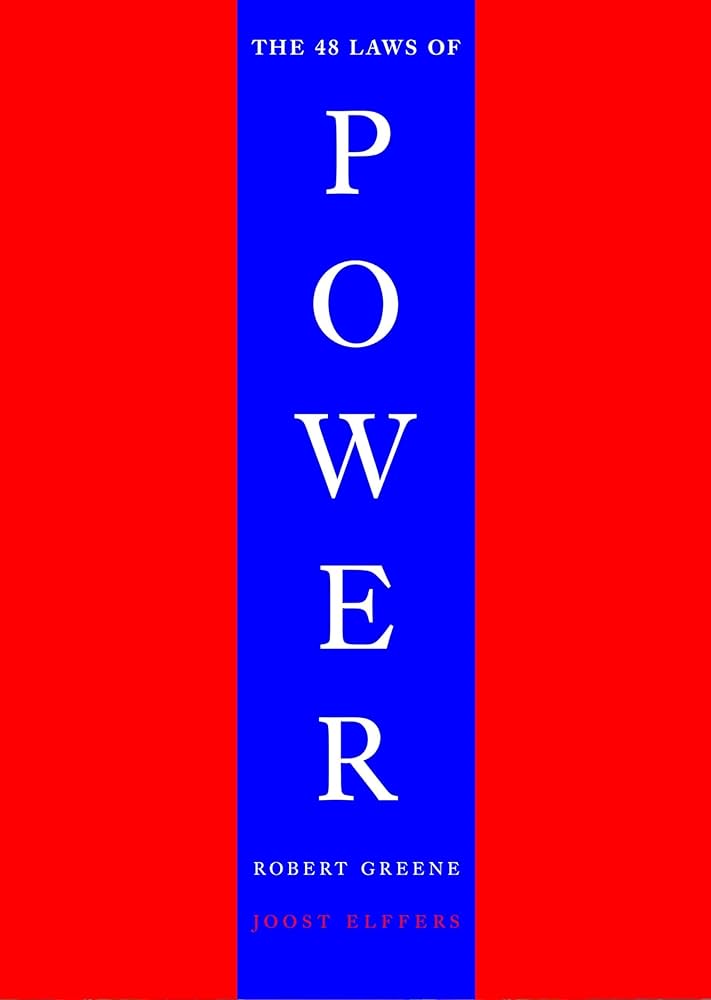
Robert Greene – 48 Laws of Power [A.I. Recap]

Disclaimer!

This post was created with the aid of Google AI “Gemini” and is written for documentation and entertainment purposes only. Always do your own research and be skeptical about everything you see and read on the internet.

Introduction

Robert Greene’s The 48 Laws of Power (1998) is a pragmatic, often controversial guide to the “game” of power. Drawing on 3,000 years of history -from Machiavelli to P.T. Barnum – Greene argues that power is amoral, and whether you chose to play or not, you are already part of the struggle.

For an entrepreneur like you, these laws are often viewed through two lenses: as a manual for strategic dominance or as a defense manual to identify and neutralize manipulative tactics form competitors.

Core Philosophy

Greene suggests that to master power, you must:

Master your emotions

Never act out of anger or insecurity.

Prioritize appearances

Perception is often more influential than reality.

Be adaptable

Rigid patterns make you a target; “formlessness” makes you untouchable.

The 48 Laws (Categorized)

To make this extensive list scannable, here are the laws grouped by their strategic intent

1. Managing Superiors and Reputation

LawPrinciple
Law 1Never Outshine the Master: Always make those above you feel superior.
Law 5Guard Reputation with Your Life: Reputation is the cornerstone of power.
Law 34Be Royal in Your Own Fashion: Act like a king to be treated like one.
Law 41Avoid Stepping into a Great Man’s Shoes: Forge your own path instead of following a legend.

2. Information and Deception

LawPrinciple
Law 3Conceal Your Intentions: Keep people off-balance; never let them know your goal.
Law 4Always Say Less Than Necessary: Powerful people intimidate by being quiet.
Law 14Pose as a Friend, Work as a Spy: Use social encounters to gather intel.
Law 21Play a Sucker to Catch a Sucker: Seem dumber than your mark to lower their guard.

3. Strategic Action and Influence

LawPrinciple
Law 13Appeal to Self-Interest: Never ask for mercy; show how helping you benefits them.
Law 16Use Absence to Increase Respect: Scarcity creates value (The Law of Supply and Demand).
Law 28Enter Action with Boldness: Hesitation is dangerous; mistakes made through boldness are easily corrected.
Law 29Plan All the Way to the End: Think through every consequence to avoid being surprised.

4. Handling Rivals

LawPrinciple
Law 2Never Put Too Much Trust in Friends: Learn how to use enemies; they have more to prove.
Law 15Crush Your Enemy Totally: If you leave a spark, the fire will eventually return.
Law 39Stir Up Waters to Catch Fish: Make your enemies angry and emotional while you stay calm.

Ethical Considerations

Critics often label the book “Machiavellian” or amoral because it prioritizes self-interest over cooperation. However, Greene maintains that he is simply describing the world as it is, not as it should be. For someone building a brand with an “ethical drive,” the book’s value often lies in it’s psychological insights – understanding what motivates people (Law 13) and the importance of a brand’s reputation (Law 5).

Modern Entrepreneurial Application

In the context of your vision to launch a custom clothing and branding business, certain laws are particularly relevant.

Law 6 (Court Attention at All Costs)

Essential for a new brand trying to break through market noise.

Law 25 (Re-create Yourself)

Allows you to forge a powerful public identity for your brand.

Law 40 (Despise the Free Lunch)

In business, anything offered “for free” usually has hidden costs or obligations.

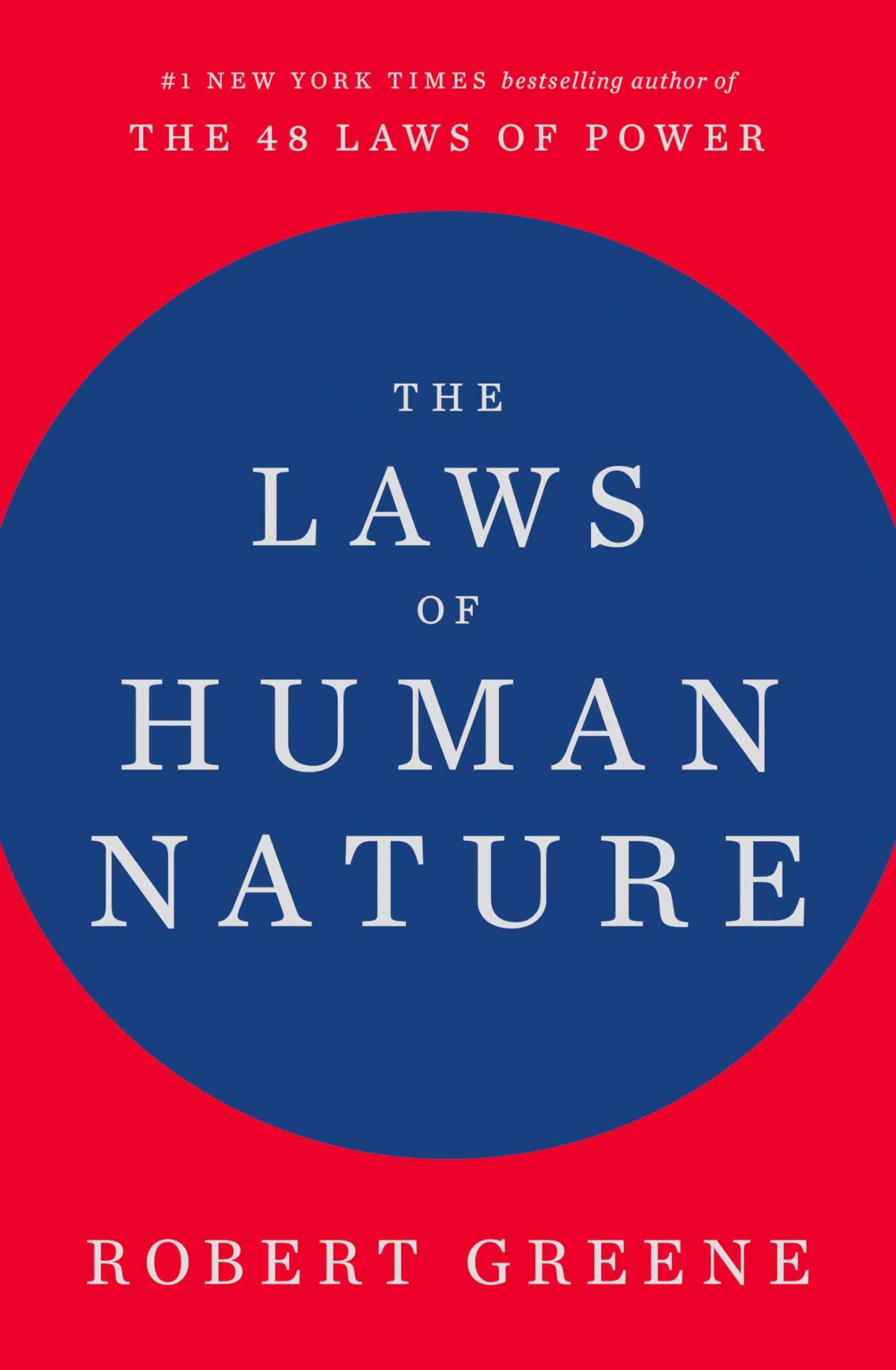
Robert Greene – Laws of Human Nature [A.I. Recap]

Disclaimer!

This post was created with the aid of Google AI “Gemini” and is written for documentation and entertainment purposes only. Always do your own research and be skeptical about everything you see and read on the internet.

Introduction

In The Laws of Human Nature, Robert Greene argues that we are social animals governed by deep seated, often unconscious evolutionary drives. He suggests that while we like to believe we are rational and autonomous, we are actually frequently controlled by emotions, biases, and the “shadow” sides of our personalities.

The book is structured around the 18 Laws, designed to help you decode human behavior, master your own emotions, and develop superior social intelligence – a toolkit essential for any visionary enterpreneur.

Core Pillars of the Laws

1. The Mastery of Self (Laws 1, 8, 9, 11)

Greene emphasizes that you cannot understand others until you understand yourself.

  • The Law of Irrationality: We are not rational by nature. Rationality is a quality we must work to attain by recognizing our emotional triggers and biases (like the Confirmation Bias or Appearance Bias)
  • The Law of Repression: Everyone carries a “Shadow” -repressed desires and traits. Acknowledging this dark side prevents it from leaking out in destructive ways and allows you to use that energy creatively.
  • The Law of Grandiosity: Success can lead to a dangerous inflation of the ego. Greene distinguishes between Practical Grandiosity (rooted in work and results) and Fantastical Grandiosity (delusions of being a “god”).

2. Decoding Others (Laws 3, 4, 10, 13)

To navigate the market and build a brand, you must see people as they truly are, not as they appear.

  • The Law of Role-Playing: People wear masks to suit social expectations. To find the truth, watch for nonverbal cues: micro-expressions, tone of voice, and body language.
  • The Law of Compulsive Behavior: A person’s character is their destiny. People are prone to repeating patterns. Look at their past and how they handle stress to predict their future actions.
  • The Law of Envy: This is a silent, pervasive emotion. High achievers often trigger envy in others. Greene advises being humble about your success to avoid becoming a target.

3. Influence and Social Dynamics (Laws 7, 14, 15, 17)

Greene provides strategies for leading and persuading without triggering resistance.

  • The Law of Defensiveness To influence people, you must confirm their “self-opinion.” People need to feel they are intelligent, autonomous, and good. If you challenge these, they will close off.
  • The Law of Conformity: In groups, people naturally regress to a more primitive, emotional state. Understanding this “Group Effect” helps you resist the downward pull of the herd and maintain your unique vision.
  • The Law of Fickleness: Authority is not granted; it is established. Leaders must project a sense of purpose and vision while remaining slightly elusive to maintain respect.
Image of the prefrontal cortex vs the limbic system

Summary Table: Key Laws for Entrepreneurs

LawKey InsightEntrepreneurial Application
Law 2: NarcissismWe are all self-absorbed to some degree.Turn self-love into Empathy. Understanding customer needs better than they do is the source of all brand value.
Law 5: CovetousnessPeople desire what they don’t have.Become an elusive object of desire. Use scarcity and mystery to build brand prestige.
Law 6: ShortsightednessMost people focus on the immediate.Maintain a long-term “Farsighted” perspective to anticipate market trends.
Law 13: AimlessnessPeople feel lost without direction.Advance with a clear sense of purpose. A brand with a “mission” attracts loyal followers.

The “Chemistry” of Behavior

Greene often touches on the “biological” reality of our nature. He discusses how our brains are wired for survival in a tribal environment, which is why we feel such intense pressure to fit in or why stress causes us to revert to “low-grade” emotions. By treating human behavior as a chemical reaction – predictable and governed by specific triggers – you can remain a calm observer rather than a reactive participant.

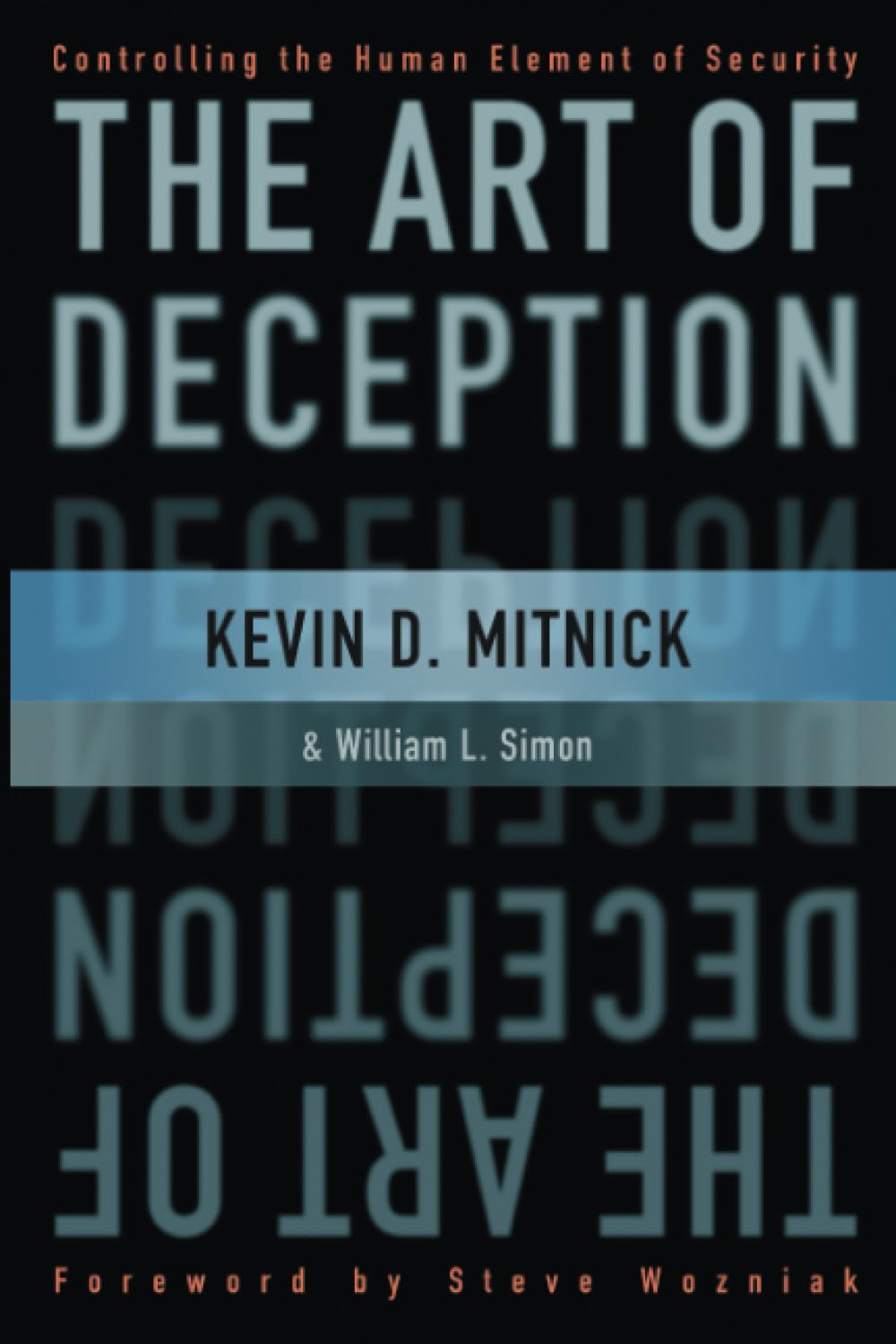
Kevin D. Mitnick – The Art of Deception [A.I. Recap]

Disclaimer!

This post was created with the aid of Google AI “Gemini” and is written for documentation and entertainment purposes only. Always do your own research and be skeptical about everything you see and read on the internet.

Introduction

In The Art of Deception, Kevin D. Mitnick – once the world’s most wanted hacker – shifts the focus from technical firewalls to the “human firewall.” His central thesis is that the human element is the weakest link in any security chain. While companies spend millions of encryption and hardware, Mitnick demonstrates that a polite, well-informed social engineer can often bypass these systems simply by asking the right person for help.

1. The Core Philosophy: Social Engineering

Mitnick defines social engineering as the use of influence and persuasion to deceive people into revealing sensitive information. He argues that:

Security is a process, not a product.

Technology alone creates an “illusion of security.”

Human psychology is the exploit.

Attackers leverage innate human traits like trust, the desire to be helpful, the tendency to follow authority, and the fear of getting into trouble.

2. Key Tactics & Techniques

The book is structured around fictionalized (but realistic) stories that illustrate specific manipulation tactics.

Pretexting

Creating a fabricated scenario (a “pretext”) to establish trust. An attacker might pose as a technician, a fellow employee, or an executive’s assistant.

The “Foot-in-the-Door” Technique

Asking for a small, seemingly harmless piece of information first. Once the victim complies, they are psychologically more likely to agree to a larger, more sensitive request later.

Reverse Social Engineering

The attacker creates a problem (e.g., a network crash) and then poses as the solution. The victim, feeling grateful, is less likely to question the “expert’s” credentials.

Leveraging Authrity

Using the names of high-ranking executives to intimidate lower-level employees into bypassing standard security protocols.

3. The “Mitnick Message”

After each story, Mitnick provides an analysis of what went wrong and how to fix it. His recommendations for a “Human Firewall” include:

MeasureDescription
Verification ProtocolsNever release information without verifying the identity of the requester through a call-back or official ID.
Security AwarenessTraining employees to recognize “red flags,” such as urgency, requests for passwords, or uncharacteristic behavior from managers.
Information ClassificationTreating even “innocuous” data (employee directories, internal jargon) as sensitive, as these are the tools attackers use to build credible pretexts.
The Power of “No”Creating a corporate culture where employees feel empowered to say no to requests that violate security policy, regardless of the requester’s supposed rank.

Why it matters for your Brand

As an entrepreneur building a vision and a brand, this book is a reminder that your intellectual property and custom designs aren’t just protected by passwords. Your brand’s value is also held by your future employees and partners.

Building “security-conscious” operations from day one ensures that as your brand grows, your “ethical drive” is protected from those who would use deception for profit.

Christopher Hadnagy – Social Engineering The Science of Human Hacking [A.I. Recap]

Disclaimer!

This post was created with the aid of Google AI “Gemini” and is written for documentation and entertainment purposes only. Always do your own research and be skeptical about everything you see and read on the internet.

Introduction

In Social Engineering: The Science of Human Hacking, Christopher Hadnagy shifts the focus from digital hacking to “human hacking.” He explores how to use psychology, influence, and persuasion to elicit information or action from others.

For an entrepreneur with a high ethical drive, this book serves as the ultimate manual on the mechanics of trust. It teaches you how trust is built – and how it can be exploited – so you can protect your vision and build more authentic professional relationships.

1. The Power of Information Gathering

Hadnagy argues that the most successful “hacks” (or negotiations) happen before you even speak.

OSINT (Open Source Intelligence)

In the business world, this means doing your homework. Knowing a partner’s history, interests, and “chemistry” allows you to tailor your approach.

Pretexting

This is the “character” you play. For you, this isn’t about lying; it’s about choosing the right “entrepreneurial mask” (the visionary, the expert, or the partner) to make the other person feel comfortable.

2. Elicitation Techniques

This is the art of getting people to give you information without them realizing they are being interviewed.

Quid Pro Quo

Give a little information about your brand to get the other person to share theirs.

The “Deliberate False Statement”

Making slightly incorrect statement to trigger the other person’s “correction instinct,” which often reveals the truth (e.g., “I heard your manufacturer only handles small batches,” to get them to reveal their actual capacity).

3. The Psychology of Influence (The “Triggers”)

Hadnagy builds on the principles of Robert Cialdini, focusing on why we say “yes”:

Reciprocity

Doing something small for a client or follower (like a free health tip on your blog) creates a subconscious “debt.”

Authority

Using your market awareness and professional branding (custom notebooks, pens) to signal you are a person of consequence.

Scarcity/Urgency

Creating a “limited window” for an opportunity to bypass the targets logical filters.

4.Micro-Expressions and Body Language

Hadnagy integrates the work of Dr. Paul Ekman (and Joe Navarro) to read “leaks” during high – stakes meetings.

The “Leakage”

Even the best liar will have a split-second facial twitch or “micro-expression” that reveals their true emotion (anger, disgust, or fear).

The Baseline

You must know how someone acts when they are safe to know when they feel “hacked” or uncomfortable.

5. Ethics: The “White Hat” Perspective

This is where Hadnagy aligns with your vision. He distinguishes between “Black Hat” (malicious) and “White Hat” (ethical) social engineering.

The Goal

Influence should leave both parties feeling better than they did before the interaction.

Manipulation vs. Influence

Manipulation is for the benefit of the hacker; influence is for the benefit of the goal or the collective.

Why this matters for the “Entrepreneur”

You are the source of your brand’s value. Hadnagy’s work teaches you to see the “social architecture” of every room you enter. It ensures that when you sell your custom products or blog your health journey, you are doing it with a deep understanding of the human operating system.

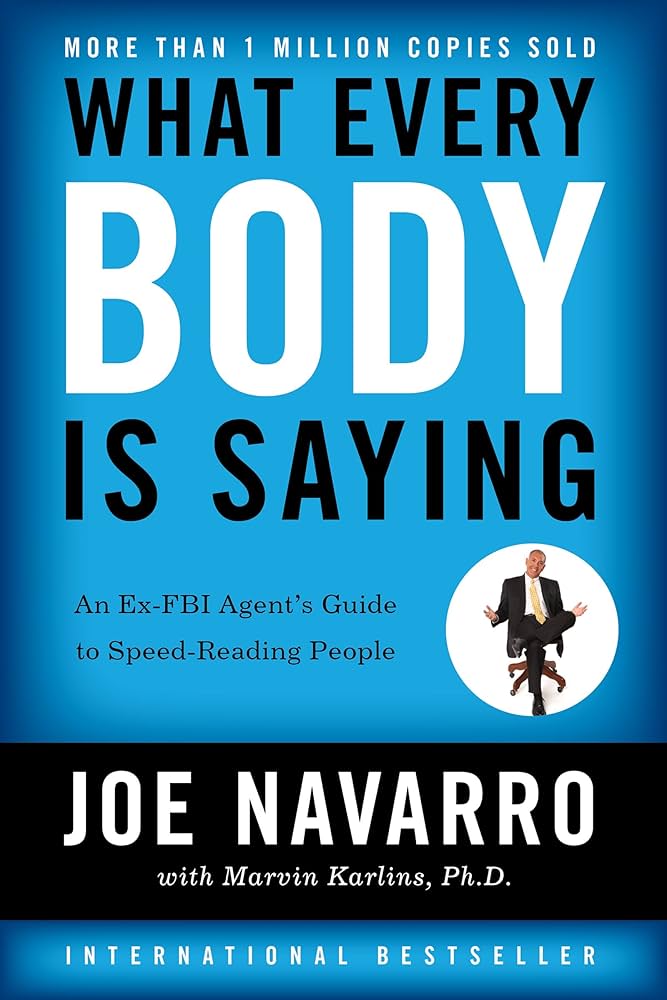
Joe Navarro – What Every BODY Is Saying [A.I. Recap]

Disclaimer!

This post was created with the aid of Google AI “Gemini” and is written for documentation and entertainment purposes only. Always do your own research and be skeptical about everything you see and read on the internet.

Introduction

In What Every Body is Saying, former FBI counterintelligence officer Joe Navarro explains that nonverbal communication is the most honest way to understand what people are truly thinking and feeling.

Here is a concise summary of the core principles:

1. The “Honest Brain” vs. The “Lying Brain”

Navarro breaks down the brain into two main parts regarding communication:

The Limbic System (The Honest Brain)

This part reacts instinctively and instantly to the environment. It cannot be easily controlled, making its physical “tells the most reliable source of truth.

The Neocortex (The Thinking Brain)

This is the part of the brain that allows us to plan, reason, and – importantly – lie. Because we can “think” our way through the words, speech is often less reliable than body language.

2. The survival Responses

When the limbic brain senses a threat or discomfort, it triggers three responses in order:

Freeze

The first reaction to a threat is to go still to avoid detection (e.g., person suddenly stop mid-sentence or “locking up” when asked a tough question).

Flight

If freezing doesn’t work, we try to distance ourselves. This manifests as “blocking” behaviors – leaning away, pointing feet toward the door, or closing eyes.

Fight

The last resort. This shows up as puffing out the chest, invading personal space, or aggressive gesturing.

3.The “Honest Feet” Principle

Most people focus on the face when trying to read others, but Navarro argues the feet and legs are the most honest parts of the body.

Happy Feet

Wiggling or bouncing feet signify high confidence or excitement.

The Exit Sign

If someone is talking to you but one foot is pointed toward an exit, they likely want to leave, even if their upper body is still facing you.

The Leg Cross

When people cross their legs while standing, it’s a sign of high comfort, as it puts them in a “vulnerable” (unbalanced) position.

4. Comfort vs. Discomfort (Pacifying Behaviors)

The book simplifies body language into a binary: Is the person comfortable or uncomfortable?

Pacifying Behaviours

When we experience stress, we perform “self-soothing” actions to calm the limbic brain.

  • Neck Touching/Stroking: A very common sign of insecurity or anxiety.
  • Leg Cleansing: Rubbing the palms down the thighs (to dry sweaty palms or to “wipe away” tension).
  • Lip Compression: Pressing lips together until they “disappear” is a classic sign of extreme stress or dislike.

5. How to Observe Effectively

Navarro provides a “Ten Commandments” for observation, but the most critical are:

Establish a Baseline

Observe how someone acts when they are relaxed so you can spot when they deviate from that norm.

Look for Clusters

Don’t rely on one single “tell.” Look for multiple signs of discomfort (e.g., a lip bite followed by a neck touch)

Context is King

A person crossing their arms in a cold room means something different than someone crossing them during a business pitch.