
Introduction
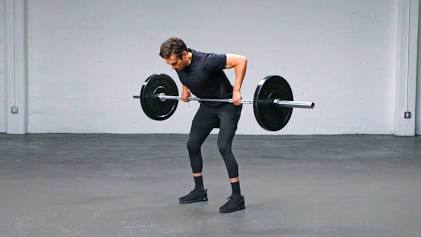
A bent-over row is a fundamental compound weight-lifting exercise designed to build upper body pulling strength, thick back muscles, and postural stability. It can be performed using a barbell, dumbbells, or a kettlebells.
Unlike machine rows that support your chest, the bent-over row requires your entire posterior chain (the muscles along the back of your body) to work statically just to hold you in position while your upper back moves the weight.
Target Muscles
The bent-over row is highly efficient because it hits almost every muscle from your hips to your neck:
- Latissimus Dorsi (Lats): The large wing-shaped muscles on the sides of your back, responsible for pulling the weight toward your torso.
- Rhomboids and Middle/Lower Trapezius: The muscles between and across your shoulder blades that squeeze together at the top, building back thickness.
- Real Deltoids: The back of the shoulders, which help you pull the upper arms back.
- Erector Spinae (Lower Back) and Hamstrings: these muscles work isometrically (holding still under tension) to keep your spine stable and protect your lower back while you hinge forward.
How to Perform It (Barbell Version)
1.) The Setup
Stand with your feet shoulder-width apart, holding a barbell with an overhand grip. Hinge forward at your hips, pushing your butt back while keeping a slight bend in your knees. Your torso should be angled at roughly 45 degrees (or closer to parallel to the floor for an advanced variation), keeping your spine completely straight and neutral.
2.) The Pull
Let the bar hand at arm’s length. Drive your elbows up and back toward the ceiling, pulling the barbell toward your lower chest or upper abdomen. Think about pulling with your elbows rather than your hands to maximize back engagement.
3.) The Squeeze and Lower
Squeeze your shoulder blades together tightly at the peak of the movement, then slowly lower the bar back down until you arms are fully extended.
Form Check: The most common mistake is using momentum by bouncing the torso up and down to swing the weight up. Keep your torso locked in place; only your arms and shoulder blades should move. If your lower back feels excessive strain, your torso might be too upright or your spine is rounding – focus on keeping the chest proud and the core braced.

 ZutisBljeg