
Introduction
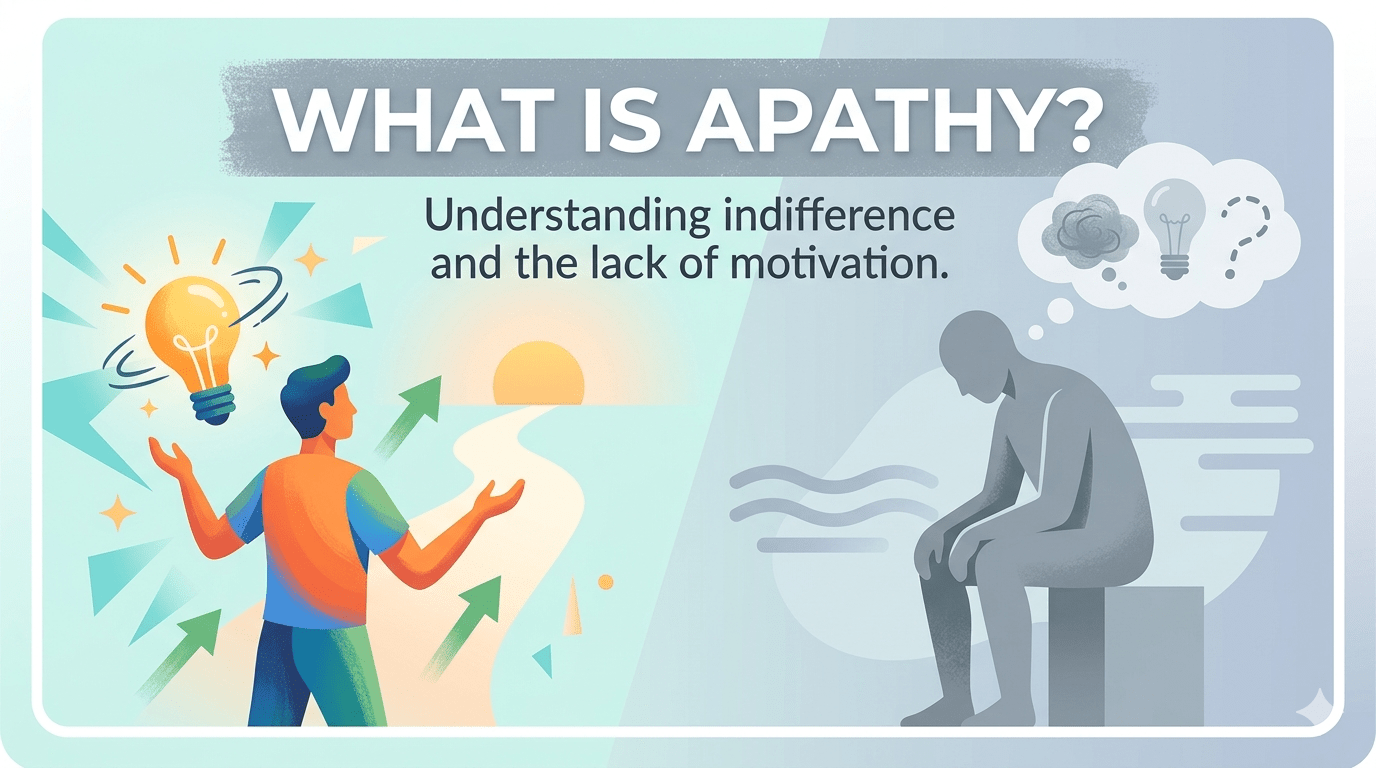
Apathy is a state of indifference or lack of interest, enthusiasm, or concern. It is characterized by a suppression of passion, emotion, or excitement. When someone is experiencing apathy, they may find it difficult to generate the motivation required to complete tasks or engage in activities they previously enjoyed.
Key Characteristics
- Emotional Flatness: A lack of emotional response to events that would typically trigger joy, anger, or sadness.
- Reduced Initiative: Difficulty starting new projects or following through existing ones.
- Low Energy: A physical or mental sense of “heaviness” or lack of “drive.”
- Social Withdrawal: A declining interest in spending time with others or maintaining relationships.
Apathy vs. Depression
While often linked, they are distinc concepts:
| Feature | Apathy | Depression |
| Primary Symptom | Lack of motivation/interest | Low mood, sadness, or hopelessness |
| Emotional State | “Empty” or neutral | “Heavy” or painful |
| Self-Image | Usually unchanged | Often involves guilt or low self-esteem |
Common Causes
- Neurological: It can be a symptom of conditions like Alzheimer’s, Parkinson’s, or stroke, often linked to the frontal lobes of the brain.
- Psychological: It may result from prolonged stress, “burnout,” or as a defense mechanism against emotional pain.
- Environmental: Persistent failure or lack of autonomy is one’s environment can lead to “learned helplessness,” which manifest as apathy.
Strategic Management
To move past a period of apathy, it is often helpful to focus on micro-wins:
- Lower the bar: Set goals so small they are impossible to fail (e.g., writing one sentence instead of a chapter).
- Routine: Rely on habit rather than “feeling like it.”
- Novelty: Introduce small, new variable into your environment to stimulate cognitive curiosity.

 ZutisBljeg