
Introduction
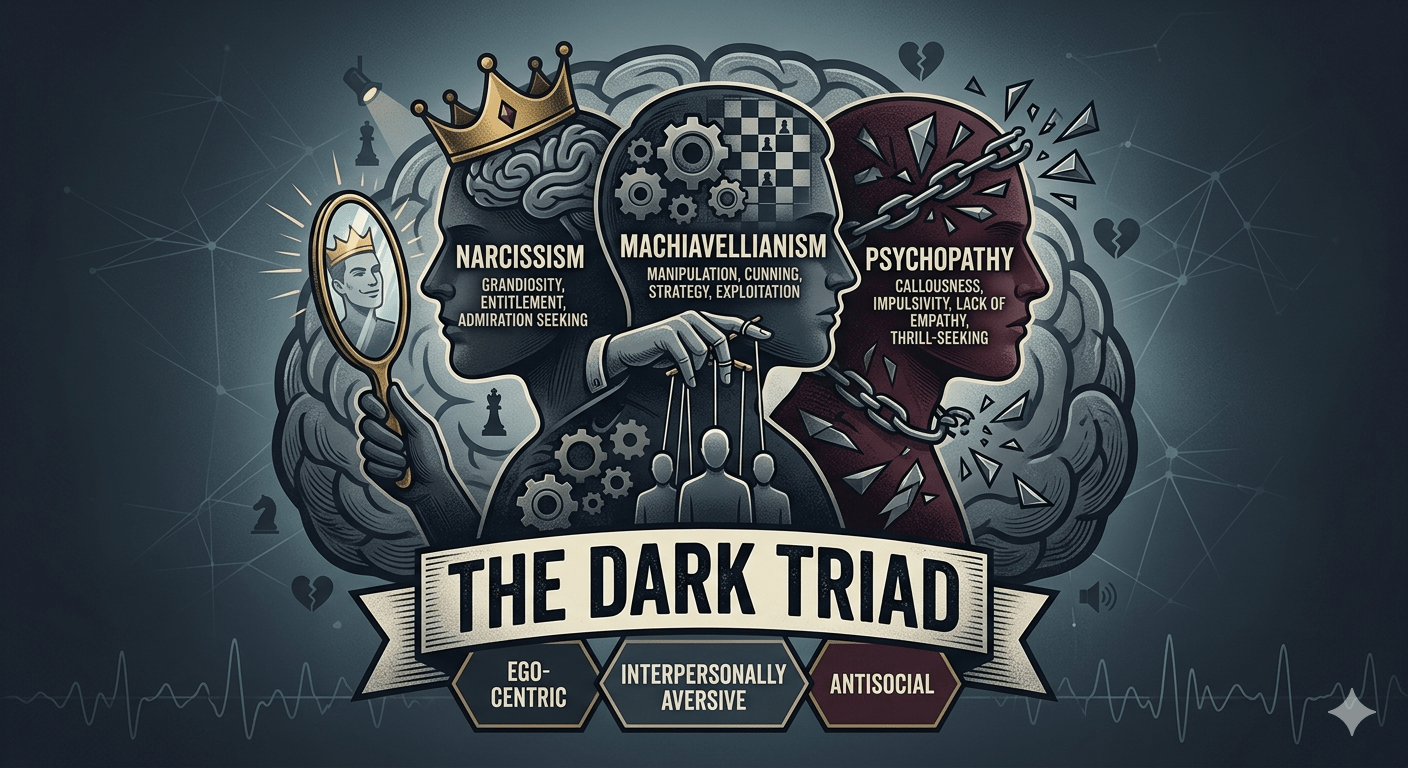
The Dark Triad is a psychological framework that describes three distinct yet overlapping personality traits: Machiavellianism, Narcissism, and Psychopathy. These traits are considered “Dark” because of their malevolent qualities, such as self-promotion, emotional coldness, and duplicity.
While these terms are often used clinically, the Dark Triad specifically studies them in a non-clinical context meaning they are viewed as personality spectrums found in the general population.
The Three Pillars
1.) Machiavellianism
Named after Niccolò Machiavelli, this trait is characterized by manipulation and exploitation.
- Key Features: A cynical view of human nature, a focus on self-interest, and a “the ends justify the means” mentality.
- Behavior: These individuals are often strategic, patient, and highly calculated in their social interactions.
2.) Narcissism
This trait is defined by grandiosity and entitlement.
- Key Features: An inflated sense of self-importance, a constant need for admiration, and a lack of empathy.
- Behavior: Narcissists often seek leadership roles to validate their superiority and can become aggressive when their ego is threatened.
3.) Psychopathy
In the context of the Dark Triad, this refers to impulsivity and callousness.
- Key Features: Low empathy, high thrill-seeking behavior, and a lack of remorse or guilt.
- Behavior: Psychopaths are often perceived as charming but are prone to risk-taking and violating social norms without hesitation.
The Common Core
While each trait is unique, they share a common core of callousness and disagreeableness. Research suggests that people high in Dark Triad traits are often
- Low in Empathy: They struggle to connect with or care about the feelings of others.
- Interpersonal Aversive: They view others as tools to be used rather than individuals to be respected/
- Highly Competitive: They prioritize winning or gaining status over collaboration.
Why it Matters
Understanding the Dark Triad is useful in fields like organizational psychology and criminology. It helps identify behaviors that may lead to toxic environments, unethical decision-making, or social friction. However, it is important to remember that having a “high score” in one area dos not necessarily equate to a clinical diagnosis; it simply reflects a personality lean toward these behaviors.

 ZutisBljeg