
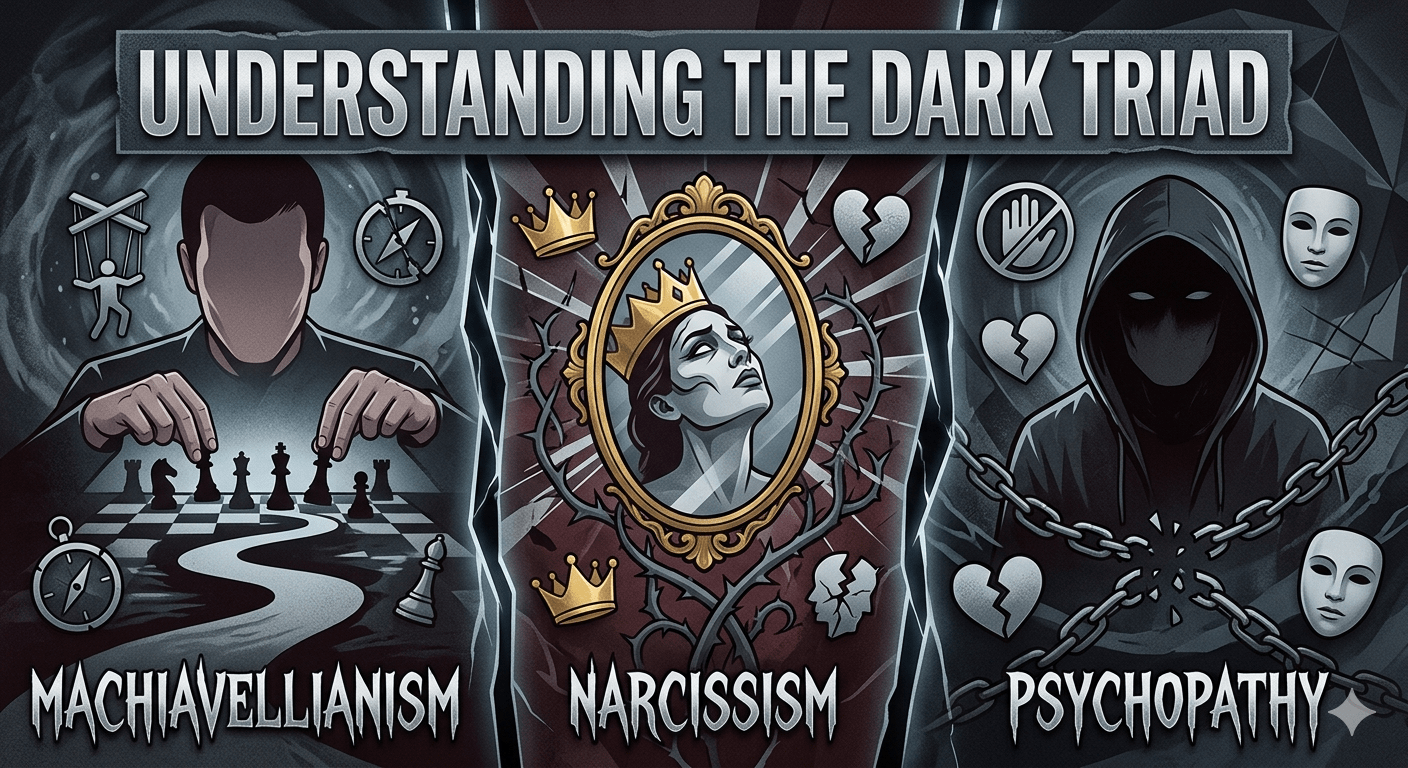
Understanding Dark Psychology
Dark Psychology is a field of study focused on the psychological tactics used by individuals to motivate, persuade, or manipulate others to get what they want. It primarily examines the “darker” side of human nature – those intentions and behaviors that are often predatory, self-serving, or exploitative.
Core concepts of the “Dark Triad”
In clinical and social psychology, researchers often use the Dark Triad as a framework to understand the personality types most associated with these beahaviors:
- Machiavellianism: Characterized by manipulation, a cynical disregard for morality, and a focus on self-interest and personal gain.
- Narcissism: Defined by grandiosity, pride, egotism, and a lack of empathy for others.
- Psychopathy: Marked by enduring antisocial behavior, impulsivity, selfishness, callousness, and remorselessness.
Common TacticsUsed
Individuals utilizing dark psychology often employ specific strategies to influence others without their conscious awareness. These include:
- Gaslighting Insidiously leading someone to doubt their own perceptions, memories, or sanity.
- Love Bombing: Using excessive attention and affection to gain control or make someone dependent.
- Reverse Psychology: Persuading someone to do something by suggesting they do the exact opposite.
- Guilt Tripping: Making a person feel responsible for another’s distress to coerce them into specific action.
- Subliminal Messaging: Using subtle cues or suggestions that bypass the conscious mind to influence behavior.
Ethical Boundaries
While “psychology” generally aims to understand and help, “Dark Psychology” is often viewed through the lens of influence. In business and negotiation, some elements – like understanding human bias – are used ethically to create “win-win” scenarios. However, it becomes “dark” when the intent is to harm or exploit another person for one’s own benefit without regard for their well-being.
Note: Understanding these tactics is often the best defense against them. Recognizing the signs of manipulation allows individuals to maintain their autonomy and set healthy boundaries.

 ZutisBljeg