
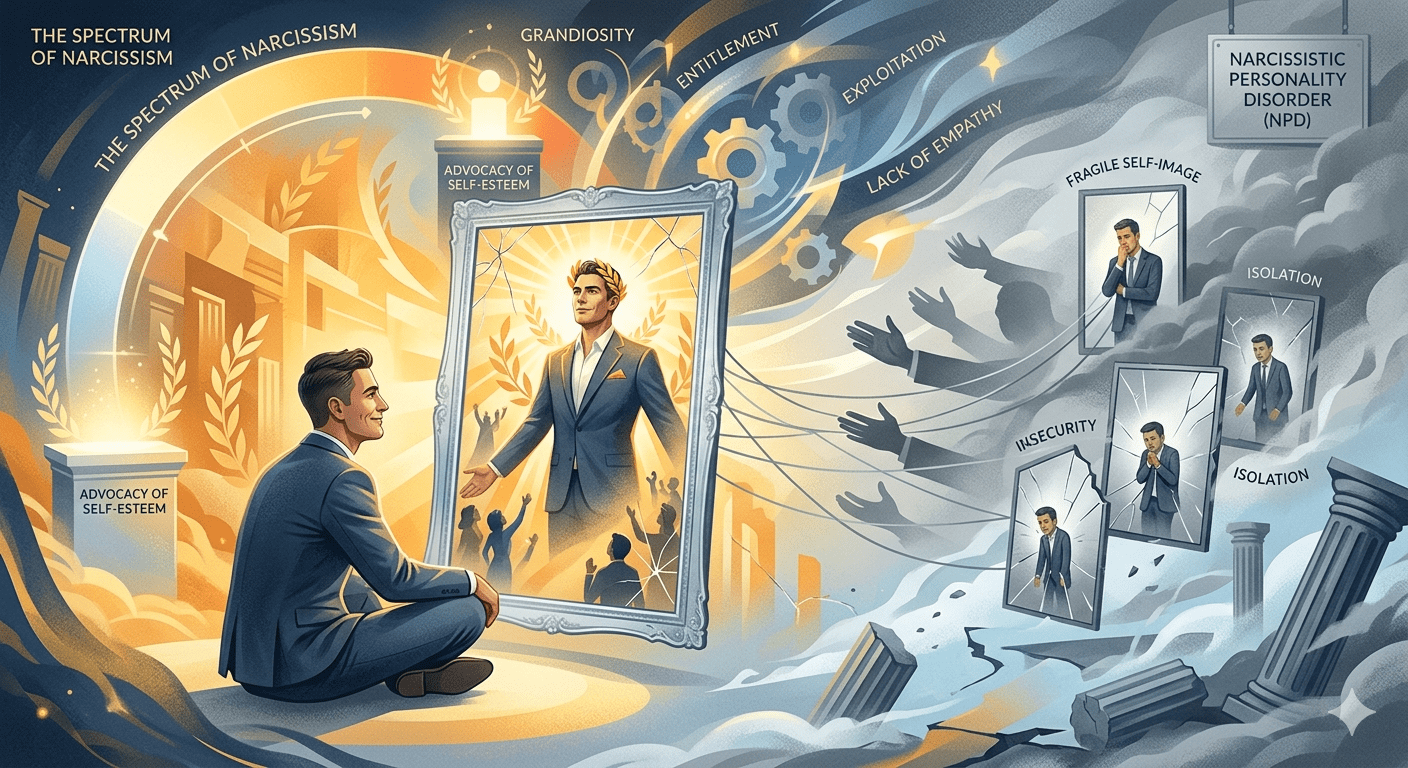
Narcissism is a multifaceted term used to describe a range of personality traits involving self-centeredness, a need for admiration, and lack of empathy for others. It exists on a spectrum, from healthy self-esteem to clinical menta health condition
1.) The Spectrum of Narcissism
It is helpful to distinguish between normal personality traits and linical diagnoses:
- Healthy Narcissism: Having a realistic sense of self-worth, taking pride in accomplishments, and maintaining a healthy level of self-interest while still caring about others.
- Narcissistic Traits: Occasional behaviors such as vanity, a desire for attention, or overconfidence. Most people exhibit these at various points in their lives.
- Narcissistic Personality Disorder (NPD): A form of diagnosis characterized by a pervasive pattern of grandiosity, a constant need for external validation, and an inability to recognize the feelings or needs of others.
2. Common Characteristics
In clinical or behavioral psychology, nariccissm is often identified by several key markers:
| Trait | Description |
| Grandiosity | An exaggerated sense of self-importance or uniqueness. |
| Sense of Entitlement | Unreasonable expectations of favorable treatment or automatic compliance. |
| Lack of Empathy | Difficulty identifying with or validating the emotions and needs of others. |
| Need for Admiration | A constant requirement for excessive praise and attention. |
| Exploitative Behavior | Taking advantage of others to achieve one’s own ends. |
3. Possible Origins
Psychologists generally believe narcissism stems from a complex interaction of factors:
- Environment: Parenting styles that involve either excessive pampering or extreme criticism/neglect.
- Genetics: Inherited characteristics that influence temparament.
- Neurobiology: The connection between the brain, thinking, and behavior.
4. Psychological Perspectiver
In modern psychology, many experts view narcissism not as “excessive self-love,” but rather as a fragile self-image. Individuals with high levels of narcissism often rely on external “narcissistic supply” (praise and success) to mask deep-seated insecurities or a vulnerable ego.
Note: Only a licensed mental health professional can diagnose Narcissistic Personality Disorder (NPD). It is distinct from simply being confident or amibtious.

 ZutisBljeg