
Magnesium
Table of Contents
Macrominerals
Trace Minerals
Magnesium is an incredibly important mineral that’s involved in over 300 biochemical reactions in the human body. Because of it’s wide-ranging role, it has numerous health benefits.
Benefits of Magnesium
Supports Muscle and Nerve Function
Magnesium is vital for propel muscle contraction and relaxation. It helps regulate the flow of calcium and other electrolytes in and out of muscle cells. A deficiency can lead to muscle cramps, twitches, or spasms. It is also crucial for nerve signal transmision.
Promotes Bone Health
While calcium is famous for bone health, magnesium is just as important. About 60% of the body’s magnesium is stored in the bones. It helps with bone formation and influences the activity of bone-building cells. It’s also necessary for the body to absorb and use calcium and vitamin D effectively.
Regulates Blood Sugar and Blood Pressure
Magnesium plays a key role in blood sugar control and insulin metabolism. It helps cells use insulin correctly, which can lower the risk of developing type 2 diabetes. It also helps relax body vessels, which is essential for regulating blood pressure and supporting overall heart health.
Helps with Sleep Relaxation
Magnesium is known for its calming properties. It helps regulate neurotransmitters that are responsible for calming the nervous system and promoting restful sleep. Many people take magnesium supplements to help with insomnia, anxiety, and stress.
Contributes to Energy Production
Magnesium is a key part of the process that converts food into energy. It is involved in creating ATP (adenosine triphosphate), which is the body’s main energy currency. A deficiency can lead to feelings of fatigue and low energy.
Signs of Deficiency
Magnesium deficiency, known as hypomagnesemia, can be dangerous because it affects the function of nerves, muscles, and the heart. Since magnesium is involved in over 300 biochemical reactions, a deficiency can have widespread effects.
Neurological and Muscular Problems
A common sign of low magnesium is neuromuscular hyperexcitability. Without enough magnesium to calm the nervous system you can experience:
- Muscle spasms, tremors, and cramps: These are often some of the first signs.
- Tingling or numbness (paresthesia) in the hands and feet.
- Fatigues and weakness: The body’s energy production is impaired, leading to a general feeling of being run down.
- Mental health changes: Apathy, irritability, anxiety, and in several cases, delirium or psychosis can occur.
Cardiovascular Complications
One of the most serious dangers of magnesium deficiency is its effect on the heart.
- Arrhythmia (irregular heartbeat): Magnesium is crucial for maintaining a stable heart rhythm. A deficiency can disrupt the heart’s electrical signals, leading to irregular beats that can be life-threatening.
- Increased risk of high blood pressure. Magnesium helps relax blood vessels, so a deficiency can contribute to high blood pressure.
- Cardiac arrest: In severe cases, the heart can stop beating.
Long-Term Health Risks
Chronic, low-grade magnesium deficiency can contribute to the development of other health problems over time:
- Osteoporosis: Magnesium is essential for bone health and the absorption of calcium. A long-term deficiency can weaken bones and increase the risk of fractures.
- Type 2 Diabetes: Magnesium plays a key role in insulin metabolism, and a deficiency can impair the body’s ability to use insulin properly, increasing the risk of developing type 2 diabetes.
- Migraine headaches: Many studies have linked low magnesium levels to an increased frequency and severity of migraines.
Note that severe magnesium deficiency is relatively rare and is often caused by underlying health issues like chronic alcohol use, digestive disorders, or certain medications rather than a simply poor diet.
Sources of Magnesium
Seeds and Nuts
- Pumpkin Seeds: These are one of the most concentrated sources of magnesium.
- Chia Seeds: These tiny seeds are packed with magnesium, as well as fiber and omega-3 fatty acids.
- Almonds and Cashews: These nuts are not only a great source of healthy fats but also provide a good amount of magnesium.
- Peanuts and Peanut Butter: A convenient and common source of magnesium.
Legumes
- Black Beans: An excellent source of magnesium, especially when cooked.
- Lentils and Chickpeas: These are versatile and easy to add to salads, soups, and other dishes.
- Soybeans and Tofu: Soy products are known for their magnesium content.
Vegetables
- Dark Leafy Greens: Spinach, Swiss chard, and kale are among the best vegetable sources of magnesium.
- Potatoes: A medium potato with the skin on provides a good amount of the mineral.
- Avocados: This popular fruit is rich in healthy fats and a decent source of magnesim.
Grains
- Whole Grains: Opting for whole grains like brown rice, oats, and whole-wheat bread and pasta can significantly boost your magnesium intake. Refining grains removes the nutrient-rich bran and germ, where much of the magnesium is found
- Quinoa: This ancient grain is not only high in protein but also contains a substantial amount of magnesium.
Other Sources
- Dark Chocolate: A delicious way to get more magnesium. Look for chocolate that is at least 70% cocoa for the most benefits.
- Fish: Fatty fish like salmon and mackerel contain magnesium, in addition to heart-healthy omega-3s.
- Dairy: Milk and yogurt are also sources of magnesium
RDA, AI and UL
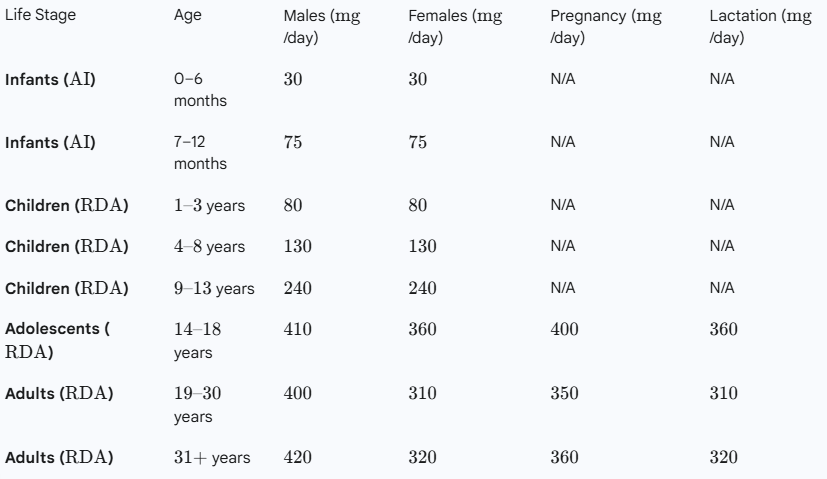
The reference values for magnesium intake – the Recommended Dietary Allowance (RDA), Adequate Intake (AI), and Tolerable Upper Intake Level (UL) – vary by age and sex.
These values are typically set by organizations like the U.S. National Academy of Medicine (NAM).
Recommended Dietary Allowance (RDA) and Adequate Intake (AI) for Magnesium
The RDA is the average daily intake level sufficient to meet the nutrient requirements of nearly all health individuals. The AI is established when there is insufficient evidence to develop an RDA.
Tolerable Upper Intake Level (UL) for Magnesium
The UL is the maximum daily intake unlikely to cause adverse health effects. For magnesium, the UL is based specifically on intake from supplements and pharmacological agents (like antacids or laxatives), not from food.
Magnesium naturally found in food and beverages is not considered a risk for toxicity in healthy people because the kidneys are very efficient at eliminating excess amounts.
UL for Supplemental Magnesium (Adults)
Adults (19+ years): 350mg/day
- This limit is set because exceeding it may cause mild, transient side effects, most commonly diarrhea, nausea, and abdominal cramping.

Exceeding the Tolerable Upper Intake Level (UL)
Exceeding the Tolerable Upper Intake Level (UL) of magnesium is a concern only for intake from non-food sources, such as dietary supplements and certain medications (like laxatives and antacids) Magnesium from food is not known to cause toxicity in healthy individuals because the kidneys effectively excrete any excess.
Potential Effects of Exceeding the UL
The most common adverse effect of exceeding the UL is due to the osmotic activity of magnesium salts in the gut, which leads to a laxative effect:
- Diarrhea: This is the primary and most common side effect used to set the UL.
- Nausea and Abdominal Cramping: Other gastrointestinal disturbances may occur.
These effects are typically mild and transient, though uncomfortable.
Magnesium Toxicity (Hypermagnesemia)
True magnesium toxicity (hypermagnesemia) from oral intake is rare in people with healthy kidney function. When it does occur, it is usually due to consuming extremely high doses of supplements or magnesium-containing medications, or due to underlying conditions like kidney failure where the body cannot excrete magnesium efficiently.
Symptoms of severe hypermagnesemia include:
- Hypotension (low blood pressure)
- Lethargy and Confusion
- Muscle Weakness
- Impaired Nerve Function (e.g., depressed deep tendon reflexes)
- Arrhythmias (irregular heartbeat)
- Respiratory Depression (slow or shallow breathing)
- In very severe and rare cases, it can lead to cardiac arrest and death.
 ZutisBljeg