
Potassium
Table of Contents
Macrominerals
Trace Minerals
Benefits of Potassium
Potassium helps lower blood pressure by balancing out the negative effects of sodium. It helps the body excrete excess sodium through urine and eases tension in the walls of your blood vessels. This can significantly reduce the risk of heart disease and stroke.
Fluid Balance and Nerve Signals
As an electrolyte, potassium is crucial for maintaining the proper fluid balance inside your cells. It works with sodium to help generate nerve impulses, which are essential for communication between the brain and the body.
Muscle and Heart Function
Potassium is necessary for muscle contractions, including the most important muscle in the body: the heart. Maintaining adequate potassium helps ensure a regular heartbeat and proper muscle function. Low levels can lead to muscle cramps, weakness, and irregular heart rhytms.
Bone Health and Kidney Stones
A diet rich in potassium may help improve bone mineral density, which can protect against osteoporosis. Potassium may also help prevent kidney stones by reducing the amount of calcium excreted in urine, as calcium is a common component of these stones.
Signs of Deficiency
Potassium deficiency, also known as hypokalemia, is a serious condition that can have significant health consequences. While it’s rare to have a severe deficiency from diet alone, it can be caused by excessive fluid loss (e.g., from vomiting, diarrhea, or heavy sweating), or from the use of certain medications like diuretics.
Common Symptoms
- Muscle Weakness, Cramps, and Fatigue: Potassium is vital for muscle contraction and nerve signals. A deficiency can lead to general weakness, muscle cramps, and overall fatigue.
- Constipation: Potassium is also important for the smooth muscle contractions in your digestive tract. Low levels can slow down digestion, lead to constipation.
- Tingling and Numbness (Paresthesia): Because potassium is crucial for nerve function, a deficiency can disrupt nerve signals, causing a tingling or prickling sensation, often in the hands and feet.
Severe Complications
A severe hypokalemia can lead to life-threatening conditions.
- Abnormal Heart Rhythms (Arrhythmia): This is one of the most serious dangers. Potassium plays a key role in the electrical signals that regulate your heart beat. A significant drop in potassium can cause irregular heart rhythms, which, in severe cases, can lead to cardiac arrest.
- Paralysis and Respiratory Failure: In extreme cases, severe potassium deficiency can cause muscle paralysis. This can affect the respiratory muscles, leading to respiratory failure and can be fatal.
- Kidney Problems: Chronic low potassium can cause long-term damage to the kidneys, affecting their ability to function properly.
Sources of Potassium
Vegetables
- Leafy Greens: Cooked spinach, Swiss chard, and beet greens are incredibly high in potassium.
- Root Vegetables: Potatoes (especially with the skin on), sweet potatoes, yams and parsnips.
- Squash: Acorn squash and butternut squash are both great sources.
- Other Vegetables: Tomato products (like tomato paste and juice), broccoli, mushrooms, and artichokes.
Fruits
- Dried Fruits: Dried apricots, prunes, and raisins are highly concentrated sources.
- Melons: Cantaloupe and honeydew.
- Other Fruits: Avocados, bananas, oranges and orange juice, kiwis, and pomegranate.
Legumes and Grains
- Beans and Lentils: White beans, kidney beans, and lentils are packed with potassium.
- Grains: Whole grains like brown rice and whole-wheat pasta are better sources than their refined counterparts.
Other Sources
- Dairy: Milk and yogurt.
- Nuts and Seeds: Almonds, cashews, and sunflower seeds.
- Protein: Fish like salmon and tuna, and lean meats like chicken and beef.
RDA, AI and UL
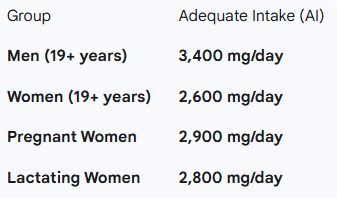
For potassium, a definitive Recommended Dietary Allowance (RDA) is not established due to a lack of sufficient evidence. Instead, an Adequate Intake (AI) is set, and a Tolerable Upper Intake Level (UL) is not set for potassium from food sources.
Adequate Intake (AI) for Potassium
The AI is the intake level that is assumed to ensure nutritional adequacy and is based on the median intake of healthy populations
Recommended Dietary Allowance (RDA)
A specific RDA for potassium has not been established for any age group, as there is insufficient data to determine the Estimated Average Requirements (EAR) needed to set an RDA.
Tolerable Upper Intake Level (UL)
A UL has not been set for potassium from food sources in healthy individuals.
- Food: The body, via the kidneys, is extremely efficient at regulating potassium balance. In people with normal kidney function, excessive potassium from food is rapidly excreted, so intake from diet alone is not considered a risk for toxicity (hyperkalemia).
- Supplements: While there is no formal UL, high does of potassium from supplements can cause adverse effects, particularly gastrointestinal irritation. High-dose supplements are generally not recommended or are available only by prescription for individuals with a diagnosed deficiency or other medical need, as they pose a risk, especially to those with impaired kidney function.
Exceeding the Tolerable Upper Intake Level (UL)
The danger of excessive potassium (high blood potassium, or hyperkalemia) is that it disrupts the electrical signals that regulate nerve and muscle function, the most dangerously affecting the heart.
The Low Risk from Food
- No UL for Food: For most healthy people, the kidneys are highly efficient at excreting any excess potassium consumed from the diet (fruits, vegetables, etc.). It is nearly impossible to reach toxic levels from food alone.
- Safety Margin: The Adequate intake (AI) is set tom promote health (like lowering blood pressure), and you can consume well above the AI from food with virtually no risk, provided your kidneys function normally.
The Primary Risk: Supplements and Impaired Kidney Function
The risk of hyperkalemia occurs in two main scenarios:
Impaired Kidney Function
- The kidneys cannot efficiently filter and excrete the excess potassium.
- This is the most common cause of dangerous hyperkalemia. People with chronic kidney disease (CKD) must often follow a low-potassium diet.
Potassium Supplements
- High-dose supplements (often more than 100 mg per pill, which is why over-the counter doses are low) can deliver a large, concentrated dose of potassium too quickly for the body to manage.
- This can overwhelm the system, even in otherwise healthy individuals, leading to a sudden, dangerous spike in blood potassium levels.
Symptoms of Hyperkalemia
Hyperkalemia is often asymptomatic in mild cases, which is why it can be particularly dangerous. When symptoms do appear, they include:
- Heart: The most severe risk is a disruption of the heart’s electrical rhythm, leading to arrhythmias palpitations, ad potentially cardiac arrest.
- Muscles: General weakness. fatigue, numbness, or tingling. In severe cases, it can cause paralysis.
- Gastrointestinal: Nausea, vomiting, and diarrhea (especially from acute supplement ingestion).
 ZutisBljeg