
Selenium
Table of Contents
Macrominerals
Trace Minerals
Selenium is an essential trace mineral that plays a critical role in the body, primarily by being incorporated into proteins to form selenoproteins. These proteins are vital for several biological functions and are the source of most selenium’s health benefit.
Benefits of Selenium
Powerful Antioxidant and Free Radical Protection
Selenium acts as a powerful antioxidant, mainly be being a key component of enzymes like glutathione peroxidases (GPx)
- It helps protect cells from oxidative stress caused by free radicals, which is linked to aging and development of chronic diseases.
- By reducing oxidative damage, selenium helps maintain the integrity of cell membranes and DNA.
Supports Thyroid Health
The thyroid gland has the highest concentration of selenium in the body.
- It is essential for the proper synthesis and metabolism of thyroid hormones. Selenoproteins help convert the inactive thyroid hormone (T4) into it’s active form (T3)
- Maintaining adequate selenium levels may help protect the thyroid gland from oxidative damage and may benefit individuals with autoimmune thyroid conditions like Hashimoto’s disease, although research is mixed on supplementation benefits.
Boosts Immune Function
Selenium plays a key role in the immune system.
- It is necessary for the proper function of immune cells and is involved in initiating regulating the immune response.
- Adequate selenium status helps the body resist infections and may help control excessive inflammation.
May Reduce the Risk of Certain Cancers
Due to its powerful antioxidant properties and its role in DNA repair, selenium has been studied extensively for cancer prevention.
- Getting sufficient selenium through the diet is associated with a lower risk of certain cancers, including colorectal, lung, and prostate cancer.
- The effects are thought to be related to its ability to prevent cellular damage and support the process that lead to the natural death of damaged cells.
Supports Cardiovascular Health
Selenoproteins help protect against heart disease in several ways:
- They reduce inflammation and oxidative stress, which are major risk factors for heart disease.
- They may help prevent oxidation of lipids (fats in the blood) and help blood platelets from aggregating (clumping together).
Important for Reproduction
Selenium is necessary for healthy reproductive function in both males and females.
- In men it’s particularly important for sperm motility and overall sperm quality.
- In women, higher concentrations have been linked to improved fertility outcomes.
Signs of Deficiency
General & Energy
- Fatigue and Weakness: one of the most common signs, often linked to the mineral’s role in thyroid function and energy metabolism.
- Mental Fog/Cognitive Decline: Selenium is required for the production of selenoproteins that support brain function, so deficiency may lead to difficulty concentrating or memory problems.
Immunity & Healthy
- Weakened Immune System: Increased susceptibility to frequent or recurring infections, as selenium is critical for the proper function of immune cells.
- Thyroid Dysfunction: Because the thyroid holds the highest concentration of selenium, a deficiency can disrupt thyroid hormone metabolism, leading to symptoms associated with and underactive thyroid (hypothyroidism), such as:
- Weight gain
- Sensitivity to cold
- Low mood/Depression
Physical Appearance
- Hair loss or Thinning: Thyroid hormones influence hair growth, and compromised selenium status can slow down thyroid hormone production.
- Nail and Skin Changes: In some cases, deficiency is linked to brittle or discolored nails and changes in skin tone or texture.
Specific and Severe Symptoms
- Muscle Weakness and Pain: Selenium is involved in protecting muscle tissues from oxidative damage; moderate deficiency is sometimes linked to muscle pain and weakness.
- Infertility in Men: Selenium is vital for healthy sperm; a lack of it can impair sperm mobility and overall quality.
- Cardiomyopathy (Keshan Disease) and Arthritis (Kashin-Beck Disease): These are severe, life-threatening conditions primarily seen in regions with extremely selenium-deficient soil (historically parts of China and Siberia). These are rare in North America and Western Europe, but they illustrate the critical nature of the mineral.
Sources of Selenium
The amount of selenium in food can vary widely depending on the concentration of selenium in the soil where it was grown (for plants) or where the animal was raised.
Top-Tier Sources (Highest Concentration)
- Brazil Nuts: Arguably the best source. A single Brazil nut can provide more than the Recommended Daily Allowance (RDA) for an adult. Caution: Due to the extremely large concentration, it’s easy to consume a toxic amount, so intake should be limited to just a few nuts a day or a few times a week.
- Seafood: Selenium binds to protein, so most seafoods is a great source.
- Organ Meats: Beef liver and kidney are very high in selenium.
Very good Sources (Protein-Rich Foods)
- Fish: Yellowfin tuna, sardines, shrimp, halibut, and cod are all high in selenium.
- Meats and Poultry: Chicken, turkey, pork (especially pork chops and ham), and beef.
- Eggs: One large hard-boiled egg provides a solid amount of selenium.
- Dairy: Cottage cheese is a notable source.
Plant-Based & Grains (Content Varies by Soil)
The selenium content of plant-based foods can be unpredictable because it depends on the soil. However, they are still major contributors to overall intake for many people.
- Grains and Pasta: Whole-wheat bread, brown rice, oatmeal, and enriched pasta/cereals.
- Legumes: Baked beans and lentils.
- Seeds: Sunflower seeds are a good plant-based source (after Brazil nuts).
- Mushrooms: Certain varieties, like Portobello mushrooms, contain selenium.
RDA, AI and UL
Selenium Intake Guidelines (μg/day)
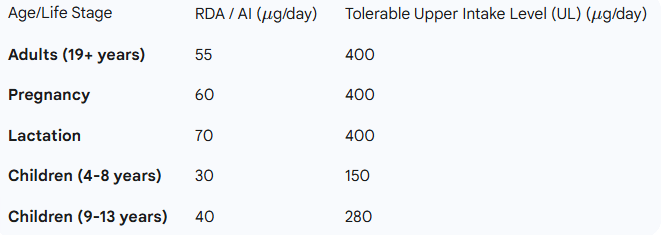
Exceeding the Tolerable Upper Intake Level (UL)
Exceeding the Tolerable Upper intake Level (UL) of 400μg/day for adults can lead to a condition known as selenosis (selenium toxicity). The severity of these symptoms depends on the amount consumed and the duration of the excessive intake.
Consequences of Exceeding the Selenium UL (Selenosis)
Signature Symptoms (The “Telltale Signs”)
These are often the first, most distinctive, or most common signs of chronic high intake:
- Garlic Odor on Breath and Body: Selenium is metabolized into compounds like dimethyl selenide which is excreted through the lungs and sweat, causing a characteristic garlic-like scent.
- Hair Loss (Alopecia): This is the critical adverse effect often used to establish the UL. It can manifest as general thinning or patchy loss.
- Brittle and Discolored Nails: The nails become fragile, prone to breakage, and can develop white streaks to eventually be shed entirely (sloughing).
Gastrointestinal Issues
Excess selenium is irritating to the digestive tract:
- Nausea and Vomiting
- Diarrhea
- Abdominal Pain
Neurological Effects
In chronic or more severe cases, the nervous system can be affected:
- Fatigue and Listlessness
- Irritability and Mood Changes
- Peripheral Neuropathy (tingling, numbness, or “pins and needles” in extremities)
- Tremors or muscle weakness
Severe/Acute Toxicity
Accidental or intentional ingestion of extremely high doses (several milligrams, far above the UL) can be life-threatening and cause:
- Respiratory Distress (Pulmonary Edema)
- Kidney Failure
- Heart Attack (Cardiovascular Collapse)
- Death
 ZutisBljeg