
Disclaimer!
This post was created with the aid of Google AI “Gemini” and is written for documentation and entertainment purposes only. Always do your own research and be skeptical about everything you see and read on the internet.
Introduction
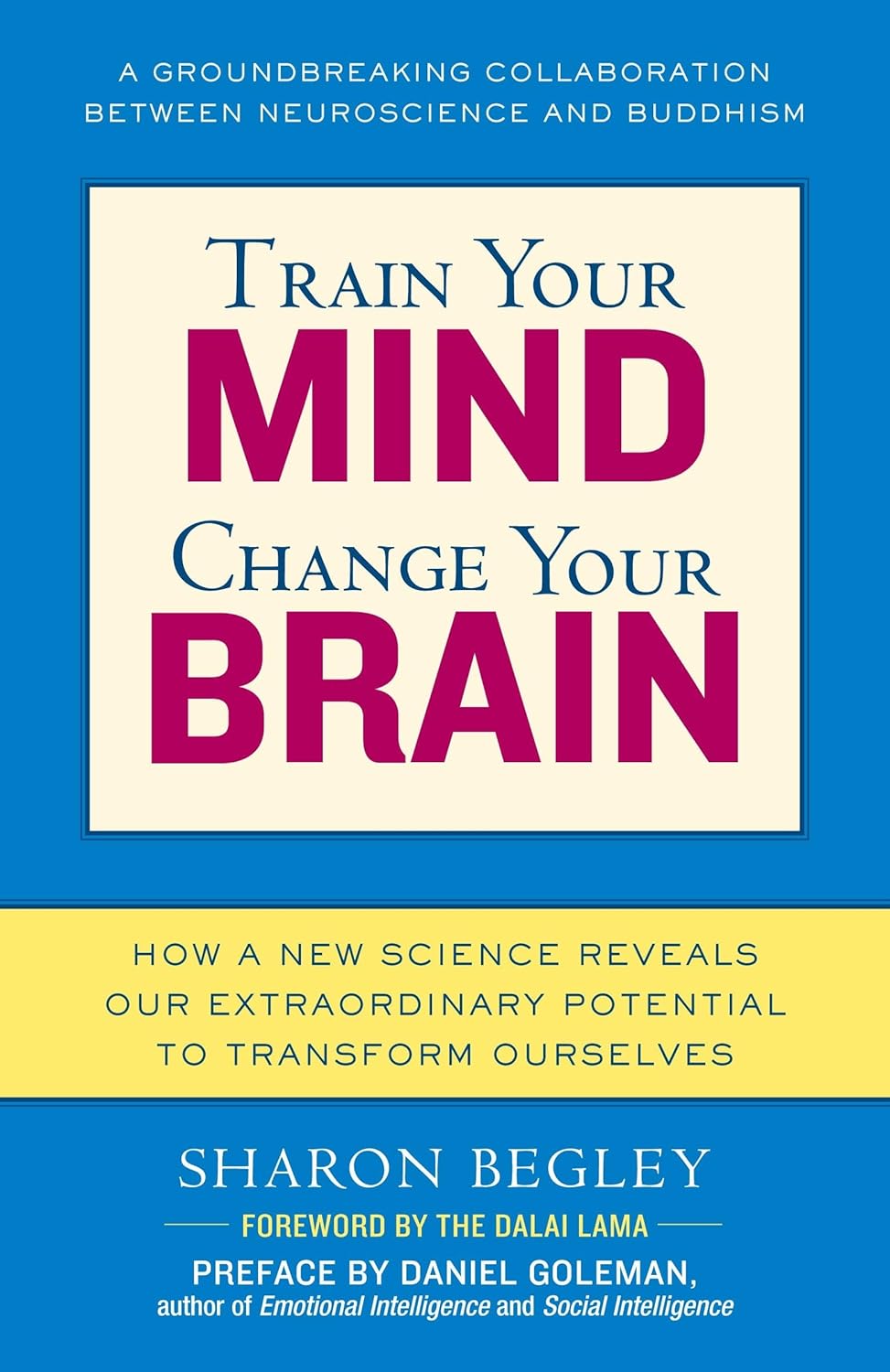
In “Train Your Mind, Change Your Brain.” science journalist Sharon Begley explores the groundbreaking intersection of ancient Buddhist wisdom and modern Western neuroscience. The book documents the discovery of neuroplasticity – the brain’s ability to physically reorganize itself in response to experience and conscious thought.
For an entrepreneur with a vision, this book is a testament to the fact you can literally “re-wire” your brain for higher creativity, ethical drive, and focus.
1. The Myth of the “Fixed” Brain
For decades, scientists believed the adult brain was “hard-wired” and unchangeable. Begley shatters this myth by showing that.
The Brain is Dynamic
Like a muscle, the brain grows and adapts based on how you use it.
Neurogenesis
The adult brain can generate new neurons, particularly in the hippocampus (the area responsible for learning and memory).
2. The Power of “Mental Training”
Begley highlights experiments involving Buddhist monks and modern researchers to show how focused thought changes physical brain structure.
Attention Training
By practicing mindfulness, individuals can physically enlarge the parts of the brain responsible for focus and emotional regulation.
Compassion as a Skill
The book argues that empathy and ethics aren’t just personality traits- they are skills that can be “trained” through meditation, leading to increased activity in the brain’s left prefrontal cortex (associated with happiness and resilience).
3. Overcoming “Emotional Hijacking”
The book provides a biological roadmap for changing your emotional responses
Top-Down Regulation
By using the conscious mind to observe emotions, you can dampen the activity of the amygdala (the “fear” center”).
Rewiring Habbits
You can weaken old, negative neural pathways (like self-doubt or procrastination) and strengthen new ones by consistently choosing different thoughts and actions.
4. Application to Learning and Recovery
Begley discusses how neuroplasticity applies to:
Skill Acquisition
When you learn a new craft – like chemistry behind your products or the logistics of branding – your brain physicalizes that knowledge by creating denser neural networks in specific regions.
Overcoming Limits
Neuroplasticity offers hope for healing from trauma or stroke, showing that the brain can “re-route” functions to healthy areas.
How this aligns with your Entrepreneurial Journey
This book confirms your belief that you are the source of value. Since your brain is plastic, your potential is not fixed. By intentionally training your mind, you can:
Enhance Creativity
Develop the neural pathways that allow for “divergent thinking” in your custom designs.
Strengthen Ethics
Harden the “compassion circuits” that fuel your ethical drive to benefit all parties involved.
Resilience
Build a brain that recovers faster from the inevitable setbacks of launching a vision.

 ZutisBljeg