
Disclaimer!
This post was created with the aid of Google AI “Gemini” and is written for documentation and entertainment purposes only. Always do your own research and be skeptical about everything you see and read on the internet.
Introduction
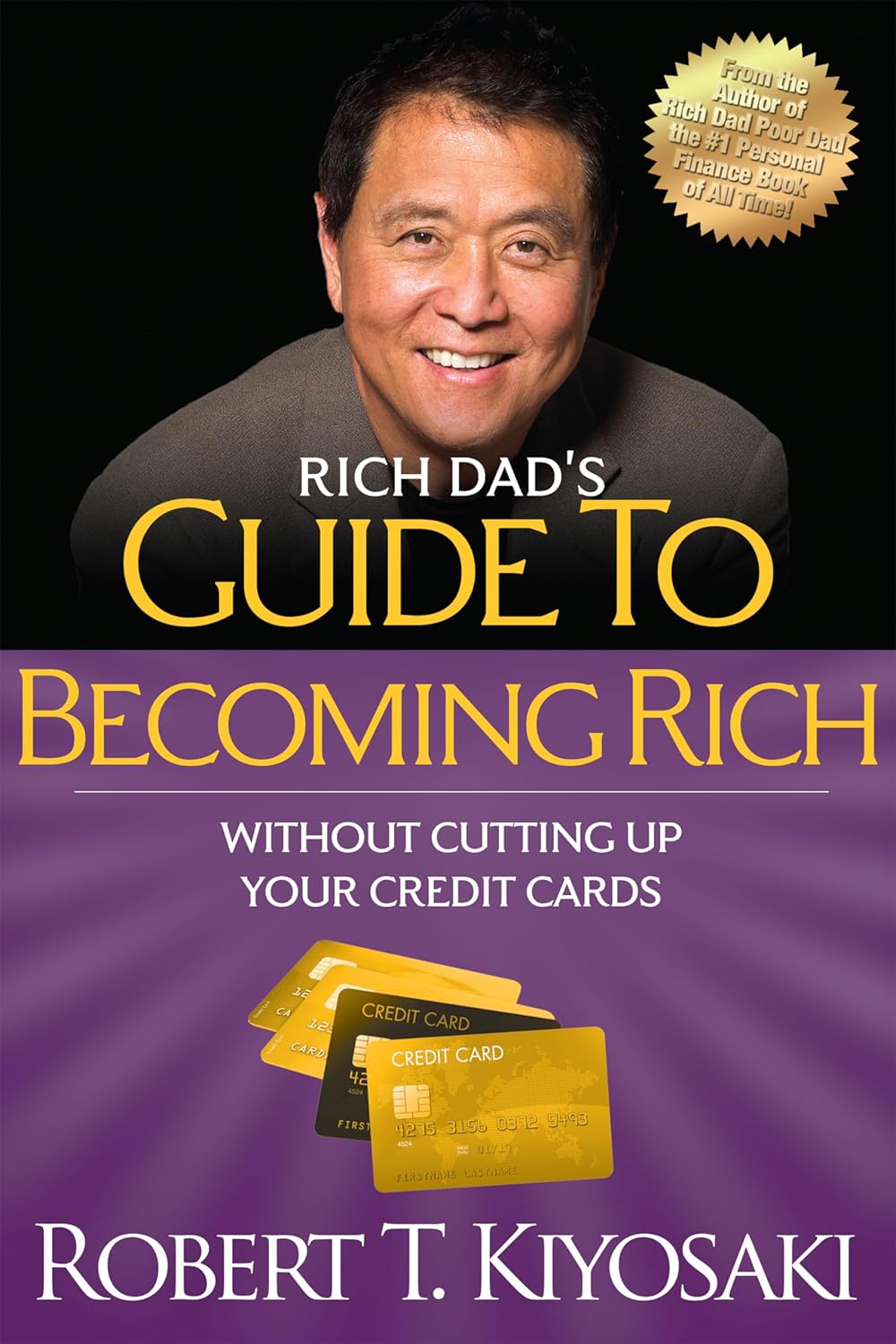
In “Rich Dad’s Guide To Becoming Rich,” Robert Kiyosaki expands on his foundational principles by focusing on the transition from an employee mindset to that of a sophisticated investor and business owner. For an entrepreneur who believes they are the “source of all value,” this book provides the tactical “how-to” for scaling that value into a professional empire.
The book is less about specific stocks and more about the mental and legal structures required to handle large-scale wealth.
1. The Power of Choice
Kiyosaki argues that being rich is a choice mad through daily habits.
The Three Paths
You can work for security (Poor Dad), work for comfort (Middle Class), or work for richness (Rich Dad).
The “Value” Mindset
Instead of saying “I can’t afford it,” you ask,” How can I afford it?” This shifts your brain from a passive state into a creative, entrepreneurial state.
2. The 90/10 Rule of Money
Kiyosaki observes that 10% of the people make 90% of the money. To get into that 10%, you must move beyond “Average Investing.”
The “B” and “I” Quadrants
True wealth is found by owning businesses (B) and investing in assets (I).
Synergy
Your custom clothing and notebook brand is your “B” quadrant engine. The profits from that engine should fund your “I” quadrant investments.
3. The Three “T’s” of Investing
To become a sophisticated investor, you must master
Taxes
Understanding how to use business structures (Corporations/LLCs) to pay ourself first and the government last.
Terminology
Knowing the language of money. As you’ve noted with chemistry, terminology is the key to understanding the “formulas” of the field.
Trends
Using your Market Awareness to see where the world is going before the masses do.
4. Financial “Chemistry”: Debt and Taxes
While “Poor Dad” viewed debt as a sin, “Rich Dad” viewed it as a tool.
Good Debt vs. Bad Debt
Good debt is money borrowed to buy an asset that pays for the debt (e.g., a loan for a printing press for your notebooks). Bad debt is money borrowed for personal consumption.
Legitimate Loopholes
Using the law to protect your brand’s assets and minimize tax liability – benefiting all parties by keeping your business healthy and capable of growth.
5. Building the “B-I” TRiangle
Kiyosaki introduces a framework for building a solid business. Every successful venture must have
Mission
Your “Vision” and “Ethical Drive.”
Leadership
Your ability to manage and inspire.
Team
Surrounding yourself with experts (Accountants, Lawyers, Specialists).
Cash Flow, Communications, Systems, Legal and Product
Note that “Product” (your pens/clothing) is the smallest part of the triangle. The systems around the product are what create the value.
Why this fits your Vision
This guide is specifically for someone who is “launching their vision.” It reinforces your belief that you are the source of value, but warns that the value must be housed within a strong business system to survive. It encourages you to think not just as a “creator” of notebooks, but as a “builder” of a brand system.

 ZutisBljeg