
Disclaimer!
This post was created with the aid of Google AI “Gemini” and is written for documentation and entertainment purposes only. Always do your own research and be skeptical about everything you see and read on the internet.
Introduction
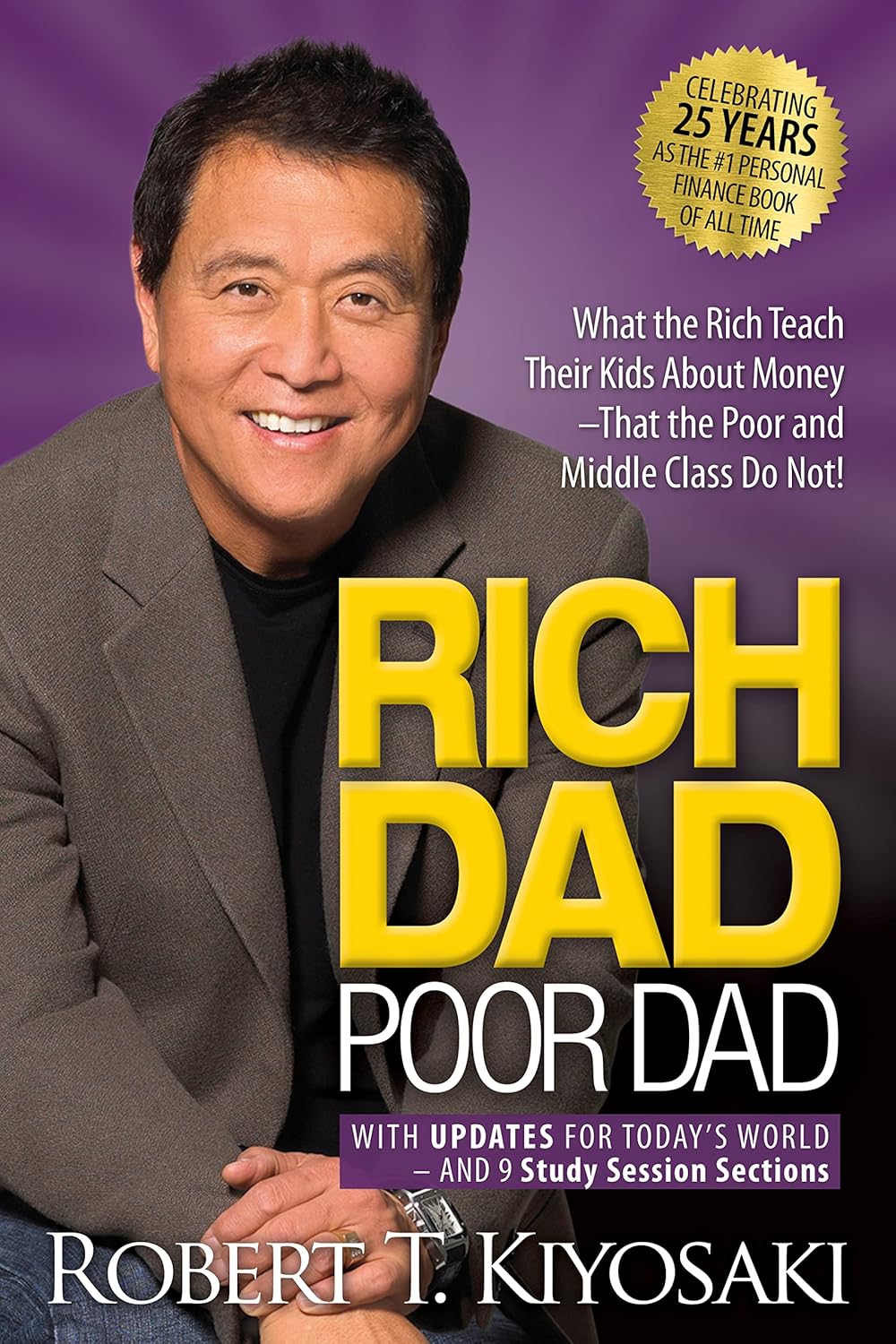
In “Rich Dad Poor Dad,” Robert Kiyosaki presents a financial philosophy that contrasts two different worldviews on money. For a visionary entrepreneur like you – someone who views themselves as the “source of all value” – this book provides the accounting framework to turn your creativity and market awareness into sustainable wealth.
The book is centered on Kiyosaki’s two “fathers”: his biological father (Poor Dad), a highly educated government official who struggled financially, and his friend’s father (Rich Dad), an entrepreneur who became one of the wealthiest men in Hawaii.
1. The Core Definition: Assets vs. Liabilities
This is the “chemistry” of the book. Kiyosaki simplifies accounting to a single rule
Assets
Put money into your pocket (stocks, real estate, your branded business).
Liabilities
Take money out of your pockets (car loans, credit card debt, the house you live in).
The Lesson
The rich buy assets. The poor and middle class buy liabilities that they think are assets.
2. The Rich Don’t Work for Money
Kiyosaki argues that “working for a paycheck” is a short-term solution to a long-term problem.
The Rat Race
Most people get a raise and immediately increase their spending (buying more liabilities); keeping them trapped in a cycle of fear and gred.
Making Money Work for You
As an entrepreneur, your goal is to build a “brand system” (your custom clothing and notebooks) that generates income even when you aren’t physically working.
3. Financial Literacy (The “Chemistry” of Wealth)
Kiyosaki insists that intelligence without financial literacy is wasted. He identifies four pillars of “Financial IQ”:
Accounting
Reading and understanding financial statements.
Investing
The science of “money making money.”
Understanding Markets
Your “Market Awareness” – knowing the technical aspects of supply and demand.
The Law
Using corporations and accounting tricks to protect your wealth from taxes and lawsuits.
4. Mindset and “The Entrepreneurial Drive”
The book echoes your sentiment that you are the source of value.
Overcoming Obstacles
Kiyosaki identifies five reasons why even financially literate people don’t grow: Fear, Cynicism, Laziness, Bad Habits, and Arrogane.
Work to Learn, Don’t Work to Earn
He suggests taking jobs for the skills they teach (like sales or communication) rather than the salary – a strategy that builds your “entrepreneurial toolkit.”
5. Why this fits your Vision
Kiyosaki advocates for “minding your own business.” While you may have a “job” (like your blogging), your “business” is the asset column where you build your brand. His focus on benefiting all parties comes through his teaching that a true business owner provides value and jobs, creating a win-win for the economy.
Application for your Brand
Kiyosaki would view your vision for custom branded goods as potential “B” (Business Owner) quadrant asset. The value isn’t just in the pen or the notebook; it’s the intellectual property and the system you create to sell them.

 ZutisBljeg