
Disclaimer!
This post was created with the aid of Google AI “Gemini” and is written for documentation and entertainment purposes only. Always do your own research and be skeptical about everything you see and read on the internet.
Introduction
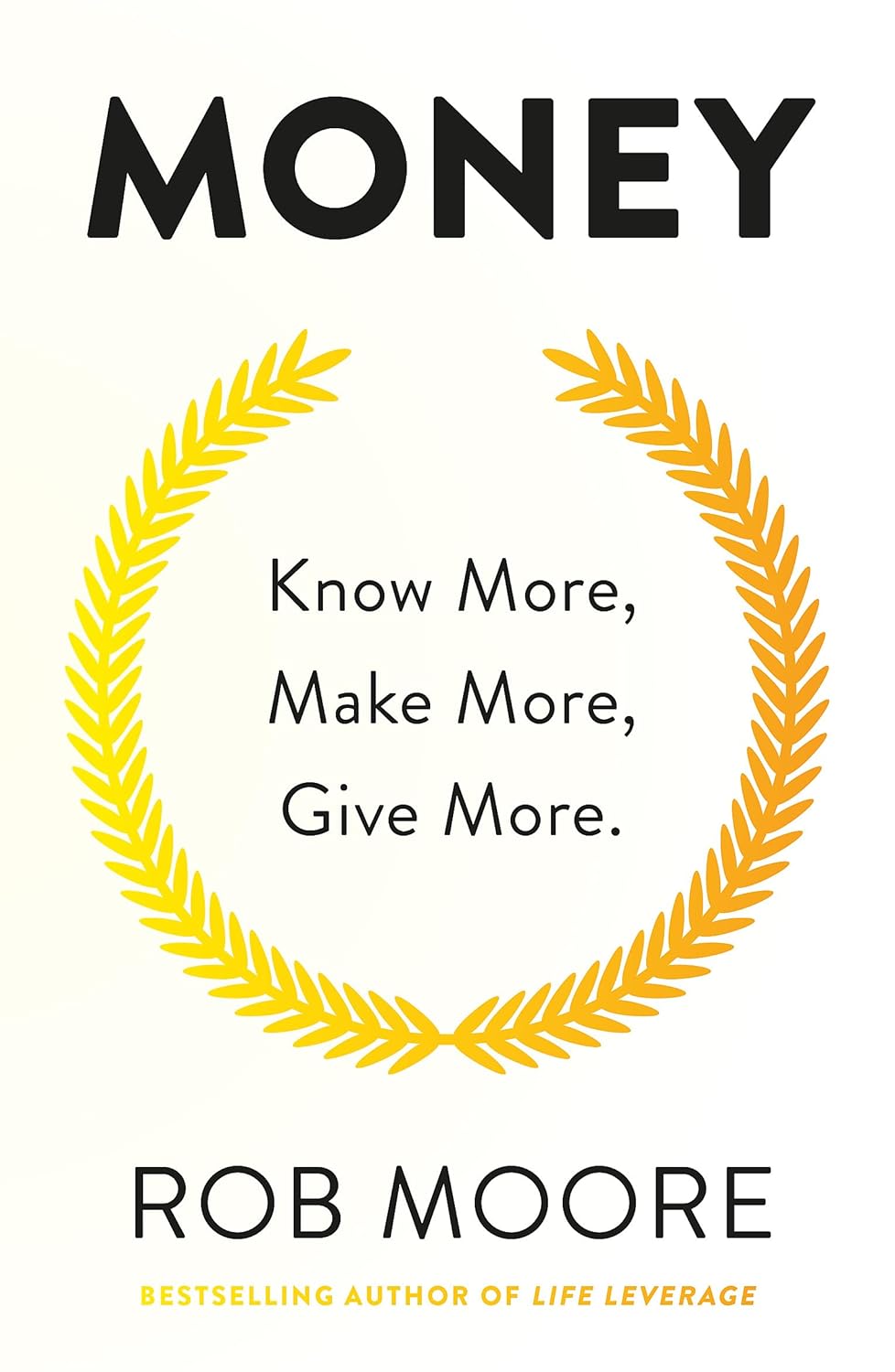
In “Money: Know More, Make More, Give More,” Rob Moore deconstructs the myths surrounding wealth and replaces them with a practical, psychological, and mechanical framework for financial mastery. As an entrepreneur who views yourself as the “source of all value,” you will find Moore’s philosophy highly resonant: he argues that money is an universal measure of the value you exchange with the world.
1. The Definition of Money
Moore defines money as a social tool for the exchange of value.
Value = Money
If you want to make more money, you must find ways to provide more value to more people. This aligns with your vision for custom products – the more unique “value” you bake into your notebooks and pens, the more the market will reward you.
Money is Neutral
It is neither good nor evil; it is a “magnifier” of your existing character. Your ethical drive ensures that as you gain wealth, you can magnify your positive impact.
2. The VAK (Value, Ability, Knowledge) Formula
To increase your “earning power,” you must focus on three areas
Value
What is the market willing to pay for? (Market Awareness).
Ability
Your skill set and competence (your “chemistry” and writing skills).
Knowledge
Understanding how money works (Financial Literacy).
3. The Psychology of Wealth
Moore identifies that most people have a “poverty mindset” based on guilt or fear.
The “Value” Mindset
You must believe you are worthy of wealth. Since you already recognize yourself as the source of value, you have a head start.
Fair Exchange
Moore emphasizes “benefiting all parties.” If you undercharge, you resent the customer; if you overcharge, the customer resents you. Success is found in the “sweet spot” of fair exchange.
4. Six Stages of Financial Health
Moore outlines a progression for the entrepreneur
1. Financial Disaster
Spending more than you earn.
2. Financial Stability
Having enough to cover basic costs.
3. Financial Security
Having a “buffer” or emergency fund.
4. Financial Independence
Passive income covers your lifestyle.
5. Financial Freedom
Having enough to do what you want, when you want.
6. Financial Abundance
Having a surplus to give back and change the world.
5. Management and Multiplication
Low-Value vs. High-Value Tasks
Moore is a staunch advocate for delegating low-value tasks (like admin) so the entrepreneur can focus on high-value tasks (like vision, branding, and strategy).
The “Law of Compounding”
Not just for interest, but for your brand’s reputation and your skills. Small, consistent improvements lead to exponential growth over time.
Why this fits your Vision
Rob Moore’s book is an anthem for the Entrepreneur. He encourages the exact creative drive you possess, but insists that for vision to be “worth the value,” it must be managed with professional financial discipline. He bridges the gap between being a “creator” and being a “wealth creator.”

 ZutisBljeg