
Disclaimer!
This post was created with the aid of Google AI “Gemini” and is written for documentation and entertainment purposes only. Always do your own research and be skeptical about everything you see and read on the internet.
Introduction
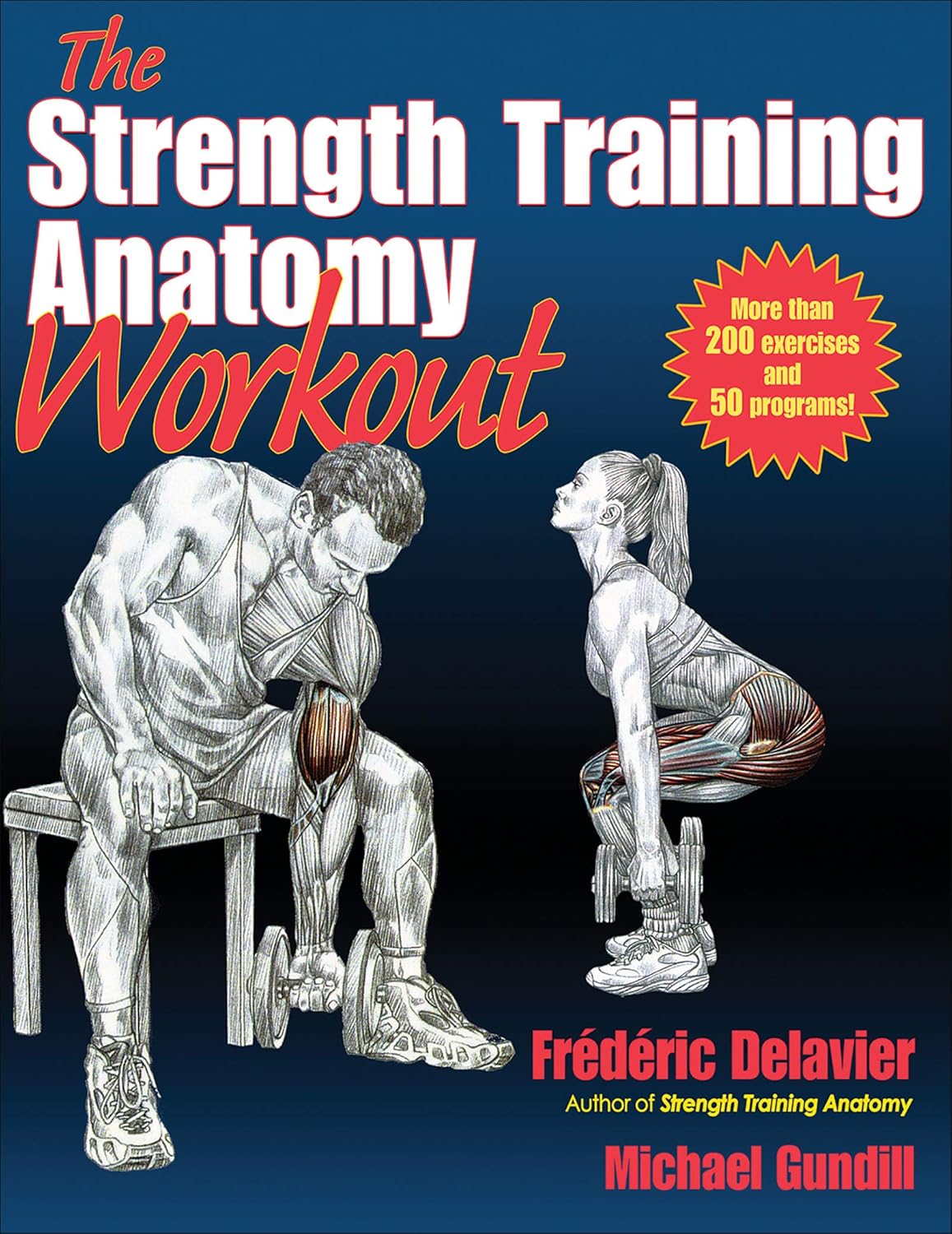
The Strength Training Anatomy Workout by Frédéric Delavier and Michael Gundil is a masterclass in the mechanics of the human body.
As a runner and health blogger, you’ll appreciate that this isn’t just a list of exercises; it is an analytical deep dive into how morphology (your body shape) dictates how you should train to avoid injury and maximize efficiency.
Core Philosophy: Anatomy Dictates Form
The central thesis of Delavier and Gundill is that there is no “one-size-fits-all” technique. Because of differences in limb length, muscle attachment points, and bone structure, a “perfect” squat for one person might be dangerous for another.
1. Morphological Analysis
The authors encourage you to analyze your own body before picking up a weight.
- Limb Length: If you have long femurs (thigh bones), traditional back squats may put excessive strain on your lower back.
- Muscle Attachments: Where tendon attaches to the bone changes the leverage and power of a muscle.
- The “Why” behind the “How”: The book uses Delavier’s famous medical-grade illustrations to show exactly which muscles are firing (primary movers) and which are stabilizing (synergists).
2. The Principles of “The Workout”
This specific book (the first in the series) focuses on minimal equipment and efficiency, making it ideal for the busy entrepreneur.
- Progressive Overload: Not just adding weight, but improving “density” (doing more work in less time).
- Surgical Precision: Learning to “feel” the muscle rather than just moving the weight. They emphasize the mind-muscle connection to ensure the target area is actually doing the work.
- Injury Prevention: By showing the “danger zones” in each exercise (like the vulnerability position of the biceps tendon during heavy curls), they teach you how to train for longevity.
Key Sections for Your Lifestyle
Targeted Conditioning
The book includes specific routines for over 30 sports. For your running, there are specific protocols to strengthen the posterior chain (glutes, hamstrings) and improve hip flexibility, which are crucial for stride efficiency and injury prevention.
Home-Based Efficiency
Much of the program is designed to be done with dumbbells, bands, or bodyweight, acknowledging that you don’t always have two hours for a commercial gym.
Recovery and Nutrition
Gundill brings a heavy focus on the “chemical” side of fitness-how your body repairs tissue and the role of specific nutrients in nerve and tendon recovery.
The “Entrepreneur” Takeaway
Delavier and Gundill treat the body like a high-performance machine. Just as you analyze market trends for your brand, they teach you to analyze your biomechanics to ensure your “physical asset” (your body) doesn’t depreciate through injury or inefficient training.
“To train effectively, you must understand the machine you are working with.”

 ZutisBljeg