
Disclaimer!
This post was created with the aid of Google AI “Gemini” and is written for documentation and entertainment purposes only. Always do your own research and be skeptical about everything you see and read on the internet.
Introduction
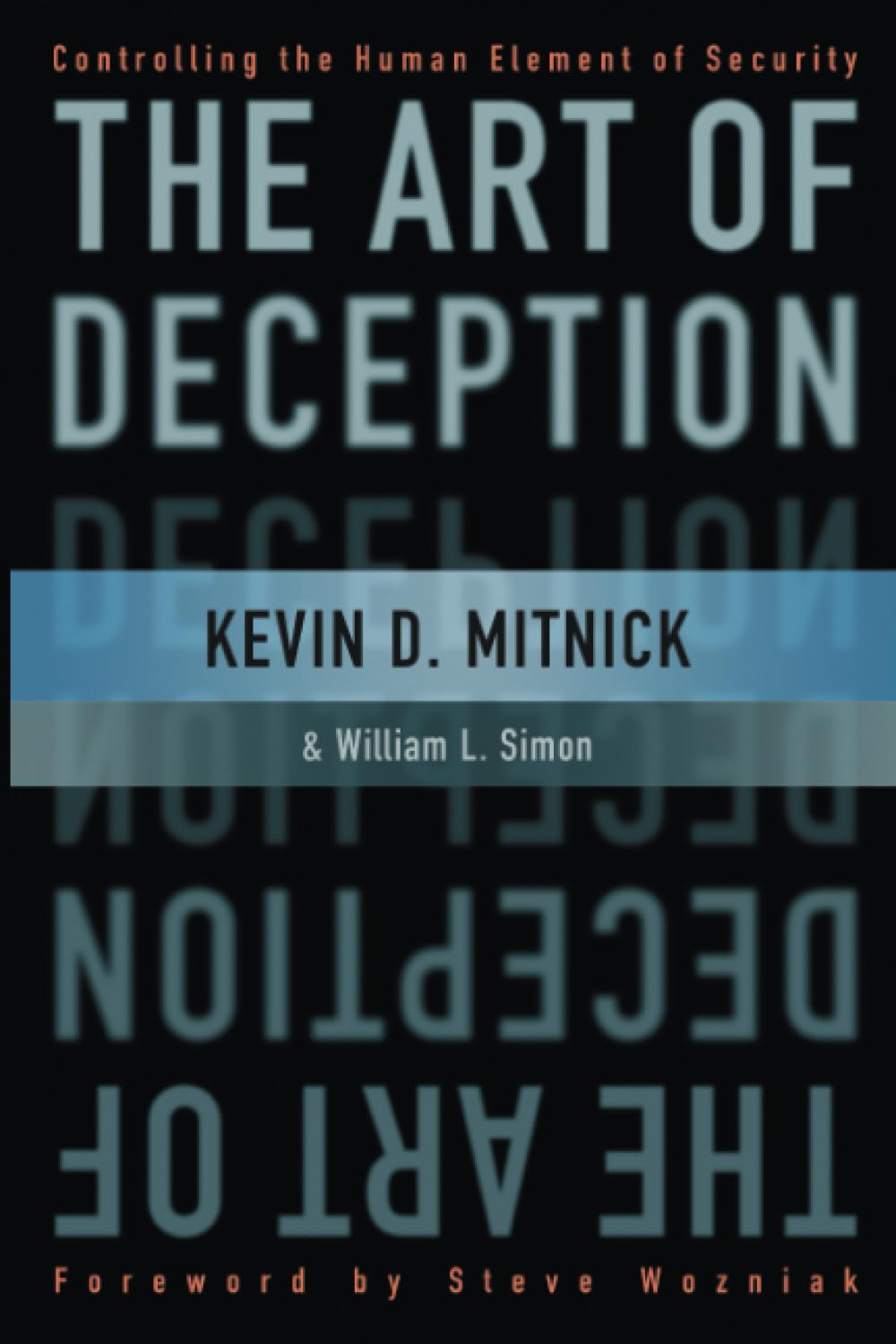
In The Art of Deception, Kevin D. Mitnick – once the world’s most wanted hacker – shifts the focus from technical firewalls to the “human firewall.” His central thesis is that the human element is the weakest link in any security chain. While companies spend millions of encryption and hardware, Mitnick demonstrates that a polite, well-informed social engineer can often bypass these systems simply by asking the right person for help.
1. The Core Philosophy: Social Engineering
Mitnick defines social engineering as the use of influence and persuasion to deceive people into revealing sensitive information. He argues that:
Security is a process, not a product.
Technology alone creates an “illusion of security.”
Human psychology is the exploit.
Attackers leverage innate human traits like trust, the desire to be helpful, the tendency to follow authority, and the fear of getting into trouble.
2. Key Tactics & Techniques
The book is structured around fictionalized (but realistic) stories that illustrate specific manipulation tactics.
Pretexting
Creating a fabricated scenario (a “pretext”) to establish trust. An attacker might pose as a technician, a fellow employee, or an executive’s assistant.
The “Foot-in-the-Door” Technique
Asking for a small, seemingly harmless piece of information first. Once the victim complies, they are psychologically more likely to agree to a larger, more sensitive request later.
Reverse Social Engineering
The attacker creates a problem (e.g., a network crash) and then poses as the solution. The victim, feeling grateful, is less likely to question the “expert’s” credentials.
Leveraging Authrity
Using the names of high-ranking executives to intimidate lower-level employees into bypassing standard security protocols.
3. The “Mitnick Message”
After each story, Mitnick provides an analysis of what went wrong and how to fix it. His recommendations for a “Human Firewall” include:
| Measure | Description |
| Verification Protocols | Never release information without verifying the identity of the requester through a call-back or official ID. |
| Security Awareness | Training employees to recognize “red flags,” such as urgency, requests for passwords, or uncharacteristic behavior from managers. |
| Information Classification | Treating even “innocuous” data (employee directories, internal jargon) as sensitive, as these are the tools attackers use to build credible pretexts. |
| The Power of “No” | Creating a corporate culture where employees feel empowered to say no to requests that violate security policy, regardless of the requester’s supposed rank. |
Why it matters for your Brand
As an entrepreneur building a vision and a brand, this book is a reminder that your intellectual property and custom designs aren’t just protected by passwords. Your brand’s value is also held by your future employees and partners.
Building “security-conscious” operations from day one ensures that as your brand grows, your “ethical drive” is protected from those who would use deception for profit.

 ZutisBljeg