
Disclaimer!
This post was created with the aid of Google AI “Gemini” and is written for documentation and entertainment purposes only. Always do your own research and be skeptical about everything you see and read on the internet.
Introduction
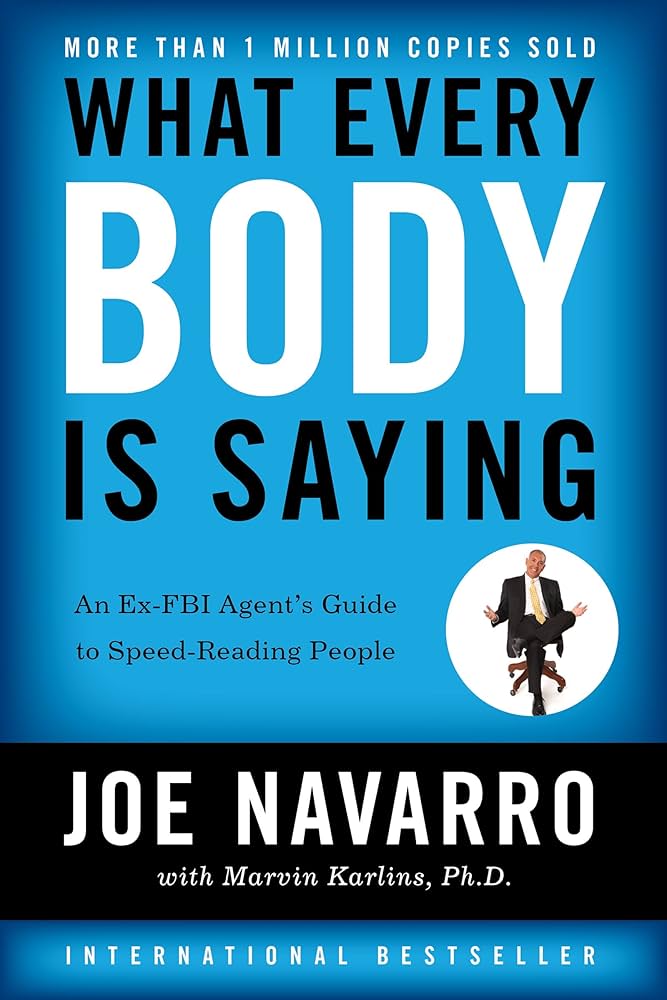
In What Every Body is Saying, former FBI counterintelligence officer Joe Navarro explains that nonverbal communication is the most honest way to understand what people are truly thinking and feeling.
Here is a concise summary of the core principles:
1. The “Honest Brain” vs. The “Lying Brain”
Navarro breaks down the brain into two main parts regarding communication:
The Limbic System (The Honest Brain)
This part reacts instinctively and instantly to the environment. It cannot be easily controlled, making its physical “tells the most reliable source of truth.
The Neocortex (The Thinking Brain)
This is the part of the brain that allows us to plan, reason, and – importantly – lie. Because we can “think” our way through the words, speech is often less reliable than body language.
2. The survival Responses
When the limbic brain senses a threat or discomfort, it triggers three responses in order:
Freeze
The first reaction to a threat is to go still to avoid detection (e.g., person suddenly stop mid-sentence or “locking up” when asked a tough question).
Flight
If freezing doesn’t work, we try to distance ourselves. This manifests as “blocking” behaviors – leaning away, pointing feet toward the door, or closing eyes.
Fight
The last resort. This shows up as puffing out the chest, invading personal space, or aggressive gesturing.
3.The “Honest Feet” Principle
Most people focus on the face when trying to read others, but Navarro argues the feet and legs are the most honest parts of the body.
Happy Feet
Wiggling or bouncing feet signify high confidence or excitement.
The Exit Sign
If someone is talking to you but one foot is pointed toward an exit, they likely want to leave, even if their upper body is still facing you.
The Leg Cross
When people cross their legs while standing, it’s a sign of high comfort, as it puts them in a “vulnerable” (unbalanced) position.
4. Comfort vs. Discomfort (Pacifying Behaviors)
The book simplifies body language into a binary: Is the person comfortable or uncomfortable?
Pacifying Behaviours
When we experience stress, we perform “self-soothing” actions to calm the limbic brain.
- Neck Touching/Stroking: A very common sign of insecurity or anxiety.
- Leg Cleansing: Rubbing the palms down the thighs (to dry sweaty palms or to “wipe away” tension).
- Lip Compression: Pressing lips together until they “disappear” is a classic sign of extreme stress or dislike.
5. How to Observe Effectively
Navarro provides a “Ten Commandments” for observation, but the most critical are:
Establish a Baseline
Observe how someone acts when they are relaxed so you can spot when they deviate from that norm.
Look for Clusters
Don’t rely on one single “tell.” Look for multiple signs of discomfort (e.g., a lip bite followed by a neck touch)
Context is King
A person crossing their arms in a cold room means something different than someone crossing them during a business pitch.

 ZutisBljeg