
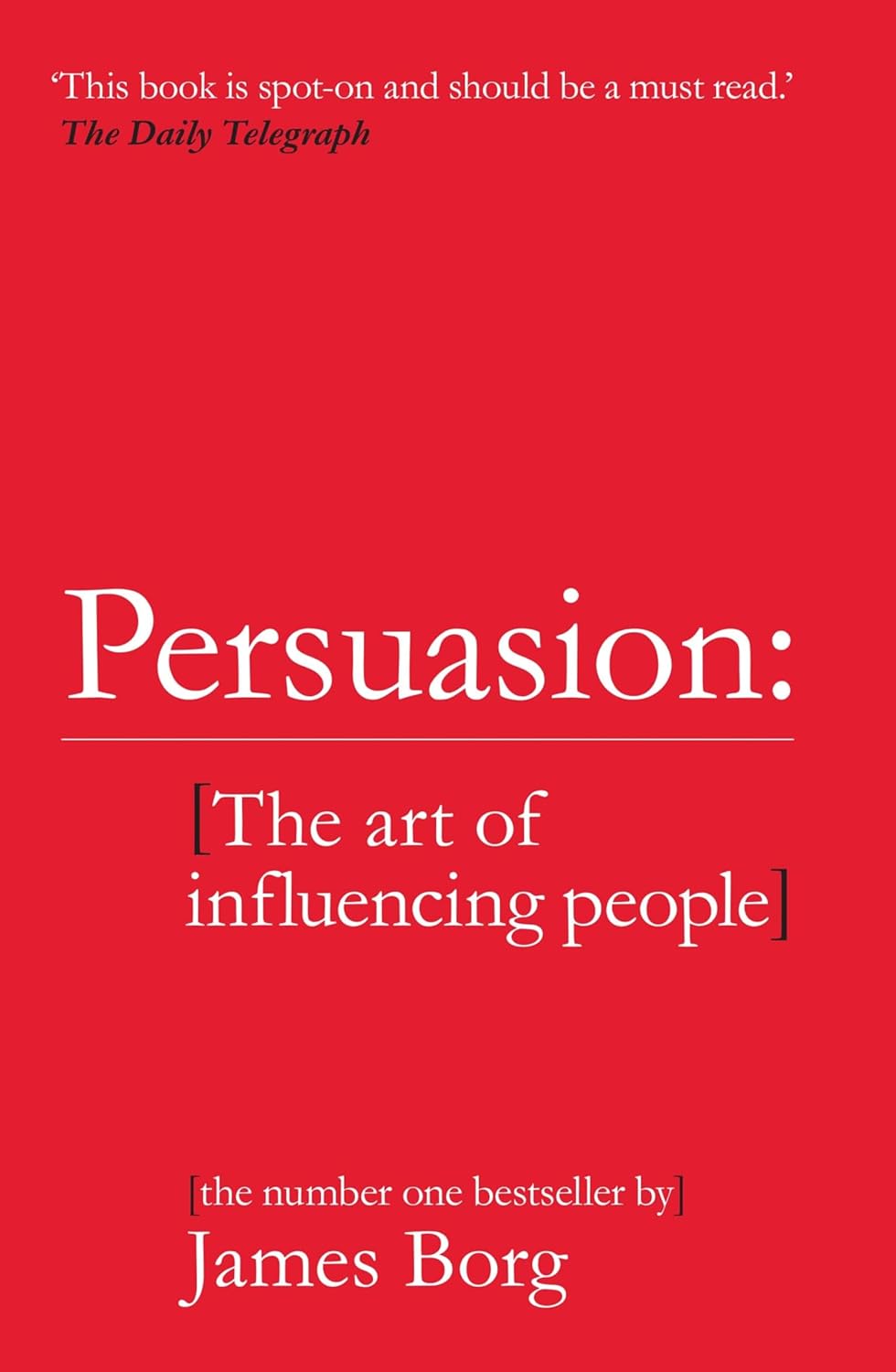
Disclaimer!
This post was created with the aid of Google AI “Gemini” and is written for documentation and entertainment purposes only. Always do your own research and be skeptical about everything you see and read on the internet.
Introduction
In Persuasion: The art of influencing people, James Borg argues that persuasion isn’t about manipulation or “jedi mind tricks.” Instead, it is about empathy, integrity, and communication. For an entrepreneur like yourself, these principles are essential for building a brand that resonates ethically and creates “win-win” scenarios.
Here is a summary of the key pillars of Borg’s approach:
1. The “Person” First (Empathy)
Borg emphasizes that persuasion starts with the other person, not your product or idea.
Empathy vs. Sympathy
Persuaders succeed by feeling with someone, not just feeling for them. You must understand their “worldview” before you can influence it.
The Power of Listening
Most people listen with the intent to reply; Borg suggests listening with the intent to understand. This builds the trust necessary for any deal.
2. The Power of Words
Borg highlights how subtle shifts in vocabulary can change the psychological response of the listener:
The “But” Eraser
Using the word “but” often cancels out everything said before it. (e.g., “i like your vision, but…” sounds like a rejection). Use “and” or pause instead.
Positive Framing
Focus on what can be done rather than what can’t.
Using “You”
The most persuasive word in the English language is the listener’s name or the word “you,” as it instantly engages their self-interest.
3. Memory and Attention
If people don’t remember your message, you haven’t persuaded them.
The Rule of Three
People struggle to remember more than three key points. Keep your pitches and your blog posts focused on a “Power Trio” of ideas.
Primacy and Recency
People Remember the beginning and the end of a conversation most clearly. Place your “ask” or your most valuable information at these points.
4. Body Language (The Silent Sync)
Similar to Joe Navarro’s work, Borg emphasizes that your physical presence must match your words.
Mirroring
Subtly reflecting the posture or energy of the other person creates a subconscious feeling of rapport.
Open Gestures
To be persuasive, you must appear trustworthy. Avoid “closed” postures like crossed arms or hidden hands.
5. Telephone and Digital Persuasion
Unlike many older books, Borg includes the nuances of persuading when you aren’t face-to-face:
The voice
Since 100% of the visuals is lost on a call, your tone, pitch, and “smile” in your voice become the primary tools of influence.
E-mail Clarity
Persuasion in writing requires brevity and a clear “call to action.” Avoid ambiguity that creates mental friction for the reader.

 ZutisBljeg