
Disclaimer!
This post was created with the aid of Google AI “Gemini” and is written for documentation and entertainment purposes only. Always do your own research and be skeptical about everything you see and read on the internet.
Introduction
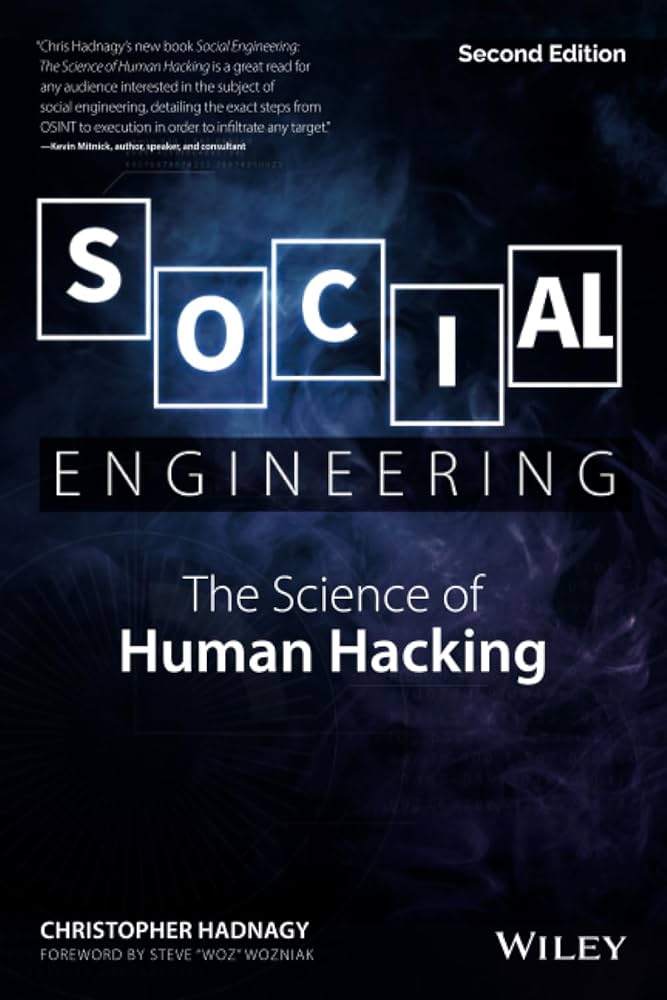
In Social Engineering: The Science of Human Hacking, Christopher Hadnagy shifts the focus from digital hacking to “human hacking.” He explores how to use psychology, influence, and persuasion to elicit information or action from others.
For an entrepreneur with a high ethical drive, this book serves as the ultimate manual on the mechanics of trust. It teaches you how trust is built – and how it can be exploited – so you can protect your vision and build more authentic professional relationships.
1. The Power of Information Gathering
Hadnagy argues that the most successful “hacks” (or negotiations) happen before you even speak.
OSINT (Open Source Intelligence)
In the business world, this means doing your homework. Knowing a partner’s history, interests, and “chemistry” allows you to tailor your approach.
Pretexting
This is the “character” you play. For you, this isn’t about lying; it’s about choosing the right “entrepreneurial mask” (the visionary, the expert, or the partner) to make the other person feel comfortable.
2. Elicitation Techniques
This is the art of getting people to give you information without them realizing they are being interviewed.
Quid Pro Quo
Give a little information about your brand to get the other person to share theirs.
The “Deliberate False Statement”
Making slightly incorrect statement to trigger the other person’s “correction instinct,” which often reveals the truth (e.g., “I heard your manufacturer only handles small batches,” to get them to reveal their actual capacity).
3. The Psychology of Influence (The “Triggers”)
Hadnagy builds on the principles of Robert Cialdini, focusing on why we say “yes”:
Reciprocity
Doing something small for a client or follower (like a free health tip on your blog) creates a subconscious “debt.”
Authority
Using your market awareness and professional branding (custom notebooks, pens) to signal you are a person of consequence.
Scarcity/Urgency
Creating a “limited window” for an opportunity to bypass the targets logical filters.
4.Micro-Expressions and Body Language
Hadnagy integrates the work of Dr. Paul Ekman (and Joe Navarro) to read “leaks” during high – stakes meetings.
The “Leakage”
Even the best liar will have a split-second facial twitch or “micro-expression” that reveals their true emotion (anger, disgust, or fear).
The Baseline
You must know how someone acts when they are safe to know when they feel “hacked” or uncomfortable.
5. Ethics: The “White Hat” Perspective
This is where Hadnagy aligns with your vision. He distinguishes between “Black Hat” (malicious) and “White Hat” (ethical) social engineering.
The Goal
Influence should leave both parties feeling better than they did before the interaction.
Manipulation vs. Influence
Manipulation is for the benefit of the hacker; influence is for the benefit of the goal or the collective.
Why this matters for the “Entrepreneur”
You are the source of your brand’s value. Hadnagy’s work teaches you to see the “social architecture” of every room you enter. It ensures that when you sell your custom products or blog your health journey, you are doing it with a deep understanding of the human operating system.

 ZutisBljeg